Without a Country: When Home Becomes the Place That Takes You In
Some books about refugees focus on the drama of escape. The moment of fleeing. The danger. The loss.
Without a Country by Ayşe Kulin does something different. It shows you what comes after.
After you’ve escaped the immediate danger. After you’ve arrived somewhere safe. After the relief wears off and you realize: now what? How do you build a life in a place that wasn’t supposed to be permanent? How do you raise children who don’t fully belong to either the country you left or the one that took you in?
This is a novel about a Jewish family who flee Nazi Germany and find refuge in Turkey. But it’s not really about World War II. It’s about the decades that follow. About how displacement echoes through generations. About how you slowly, carefully, build something like home in a place that was only supposed to be temporary.
Turkey becomes more than refuge for this family. But it never quite becomes homeland in the way the place they left was. And that tension—between gratitude and alienation, between belonging and remaining forever foreign—runs through the entire book.
It’s quiet. Patient. The kind of novel that immerses you so completely in a time and place that you feel like you’ve lived there yourself.
Flight Without Certainty
The book opens with Jewish families fleeing Germany as the Nazi threat becomes undeniable.
But this isn’t a dramatic escape narrative. There’s no last-minute dash across borders. No narrow evasion of capture.
Instead, it’s more gradual. More bureaucratic. More about difficult decisions made with incomplete information. Do we leave now or wait? Where do we even go? What do we take? What has to stay behind?
They leave behind certainty. That’s what hits hardest. Not just physical things—homes, possessions, family photos—but the certainty of knowing where you belong. Of having a language that’s yours. An identity that makes sense.
And they arrive in Turkey not knowing if this is forever or just a stopover. Not knowing if they’ll ever be able to return to Germany. Not knowing what kind of life is possible here.
Survival without permanence. That’s the condition they’re living in. And Kulin shows you what that does to people. How you live when you can’t plan too far ahead. When you’re grateful just to be safe but can’t quite let yourself settle in completely.
Turkey: Safe But Not Quite Home
Turkey during this period was accepting refugees. Offering safety when much of Europe had closed its doors.
But Kulin doesn’t romanticize this. Turkey isn’t portrayed as some perfect sanctuary where refugees are welcomed with open arms and immediately embraced.
It’s more complicated than that. More real.
The country offers safety. That’s huge. That’s everything, really, when the alternative is death.
But there’s also cultural adjustment. Language barriers. The feeling of being perpetually foreign. The quiet sense that no matter how long you stay, you’ll always be “from somewhere else.”
Turkish people in the novel aren’t hostile. But they’re not automatically welcoming either. They’re just… living their own lives. Dealing with their own problems. And these refugees are simply there, trying to figure out how to fit in.
There’s this tension between gratitude and alienation that never fully resolves. The family is genuinely grateful to Turkey. They know what they’ve been saved from. They appreciate the opportunity to rebuild.
But gratitude doesn’t automatically create belonging. Safety doesn’t mean you feel at home.
And that’s honest. Because that’s how displacement actually works. You can be grateful and still lonely. Safe and still foreign. Surviving and still mourning what you lost.
Generations: Inheriting Both Trauma and Resilience
One of the smartest things this novel does is follow the family across generations.
The parents who fled Germany carry one set of experiences. One relationship to Turkey, to exile, to identity.
But their children? Born in Turkey or brought there young enough that Germany is just stories? They have a completely different relationship to all of this.
And there’s this question that runs through the later parts of the book: If you’ve lived your entire life in a country—if you grew up there, went to school there, speak the language, have friends there—isn’t that your homeland? Even if your parents came as refugees? Even if some people still see you as foreign?
Or is it asking too much? Is there something about being a refugee family that permanently marks you as “from elsewhere” no matter how many decades pass?
The book doesn’t give you easy answers. It just shows you how this plays out across time. How children inherit both their parents’ trauma and their resilience. How they navigate belonging to a place that their parents never fully belonged to.
History shapes families long after the initial escape. The original displacement creates ripples that affect grandchildren who never experienced it directly but still carry it somehow.
Turkey Itself Changes
One of the most interesting aspects of the book is how Turkey itself is changing throughout the story.
Political shifts. Social transformations. Cultural evolution. The country the family arrived in isn’t the same country their grandchildren grow up in.
And as Turkey changes, the family’s relationship to it changes too. New possibilities open up. Old certainties disappear. The political landscape shifts in ways that affect their daily lives.
Kulin weaves this historical backdrop into the family’s private story without making it feel like a history lesson. You’re not getting lectures about Turkish politics. You’re just watching how political changes trickle down into ordinary lives.
A new law affects the family’s business. A social shift changes what’s possible for the daughters. A political movement creates tension in neighborhoods that were previously stable.
The private and public are always intertwined. You can’t separate the family’s story from the nation’s story. They’re living through history even as they’re just trying to live their lives.
Turkey: A Character in Its Own Right
The strongest element of this book might be its sense of place.
Istanbul (Turkey) isn’t just a setting. It’s almost a character. You feel the city. You see it. You can practically smell it.
The Bosphorus ferries. The neighborhoods. The streets. The way light falls at different times of day. The sounds of the city. The rhythms of daily life.
Kulin has this gift for making you feel like you’ve lived somewhere. Not visited as a tourist—lived there. Know your way around. Have routines. Recognize faces.
By the time you finish the book, Istanbul feels familiar. You’ve mentally walked its streets so many times that you could almost find your way around.
This isn’t romanticized either. It’s not picture-postcard Istanbul. It’s lived-in Istanbul. With its beauty and its problems. Its charm and its difficulties. Its moments of magic and its ordinary frustrations.
If you’ve ever traveled somewhere and felt that deep immersion where the place becomes real to you—not just scenery but an actual environment you’re inhabiting—that’s what reading this book feels like.
And that immersion matters. Because when you feel the place this strongly, the family’s gradual rooting there becomes more powerful. You understand why, despite everything, Turkey starts to feel like home. Not because it’s perfect, but because it’s real. Because they’ve lived their lives there. Because the city has become part of them.
How the Book Actually Reads
Without a Country is accessible. Easy to follow despite spanning generations and decades.
The prose is smooth. Not flashy, not trying to be literary in showy ways. Just clear, precise, bringing you into scenes and moments without unnecessary complication.
Emotionally, it’s restrained. Kulin doesn’t milk the tragedy. Doesn’t give you melodramatic scenes designed to make you cry. The sadness is there—displacement is inherently sad—but it’s presented quietly. Matter-of-factly.
This restraint makes the emotion more powerful, not less. Because you’re feeling the weight of what these people have lost and what they’re trying to build without being manipulated into feeling it.
History gets woven gently into personal lives. You’re never overwhelmed with dates and political details. You just absorb the historical context naturally as the family lives through it.
It’s the kind of book you can read steadily without getting bogged down. Each section moves smoothly into the next. You’re always oriented. You always know where you are in time and place.
Why This Works
Without a Country succeeds because it understands something crucial: refugee stories don’t end with escape.
The real story is what comes after. How do you rebuild? How do you create identity when you’re between countries? How do you raise children who belong nowhere completely?
And it succeeds because it takes time. It doesn’t rush. It lets you live with this family across decades. Watch them age. Watch their children grow up. Watch Turkey change around them.
The multi-generational scope gives the book weight. You’re not just seeing one moment of displacement. You’re seeing how displacement echoes forward. How it affects people who never directly experienced the original trauma but still carry its effects.
And the sense of place grounds everything. You’re not reading about abstract concepts like displacement and belonging. You’re watching them play out in specific streets, specific neighborhoods, specific moments of daily life in Istanbul.
That specificity makes the universal themes more powerful. Because you’re feeling them through concrete details rather than theoretical discussions.
Who This Book Is For
You’ll probably love this if:
- You enjoy historical fiction that spans generations
- You’re interested in World War II and its aftermath
- You want to understand refugee and migration experiences
- You value books with strong sense of place
- You’re curious about Turkish history and culture
- You like novels that feel immersive—like you’ve traveled somewhere
- You appreciate emotional restraint over melodrama
- You’re drawn to stories about how families survive across time
You might not connect with it if:
- You prefer war narratives focused on the action and danger
- You get impatient with multi-generational family sagas
- You’re not interested in cultural and historical detail
This is a book for readers who want to be transported. Who want to feel like they’ve lived in another time and place. Who are patient enough to let a story unfold slowly across decades.
Why I Liked This Book
This is a strong book. Well-written. Emotionally honest. Rich with historical and cultural texture.
It doesn’t quite reach the level of books that completely transform how you see something or that you can’t stop thinking about months later but it’s very good at what it does. The sense of place is exceptional. The multi-generational scope works well. The emotional restraint is effective.
This is absolutely worth reading. Especially if you’re drawn to refugee narratives, Turkish history, or books that make you feel like you’ve traveled somewhere.
What You’ll Take Away
After finishing Without a Country, you’ll have a different understanding of what displacement means.
Not just the initial trauma of fleeing. But the long, slow work of rebuilding. The complicated relationship to the place that saves you. The question of where you belong when you’re between countries.
You’ll understand why second-generation immigrants sometimes feel caught between worlds. Why their parents’ relationship to “home” doesn’t match their own. Why identity gets complicated when your family’s story involves crossing borders.
And you’ll have lived, at least mentally, in mid-20th-century Istanbul. Walked its streets. Ridden its ferries. Felt its rhythms. That immersion alone makes the book valuable.
But more than specific knowledge, you’ll have felt something. The weight of being without a country. The slow process of making a new home. The way history shapes private lives. The resilience it takes to rebuild after everything’s been lost.
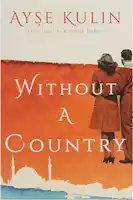
Without a Country reminds us that refuge doesn’t always mean belonging—but sometimes, it’s enough to begin again.
The family in this book never fully stops being refugees, even after decades in Turkey. There’s always that sense of being from elsewhere. That gap between where you live and where you’re from.
But they build lives anyway. Raise children. Create routines. Find moments of joy. Make Turkey into something that, if not quite homeland, is at least home enough.
And maybe that’s the real story of displacement. Not dramatic escape or triumphant integration, but the quiet, persistent work of building a life in a place that wasn’t supposed to be permanent. Of making home out of refuge. Of belonging as much as you can to a place that will never completely be yours.
It’s not a fairytale ending. But it’s honest. And honesty, especially about something as complicated as displacement, is its own kind of grace.
A moving, immersive historical novel about exile, belonging, and finding home—set against a vividly rendered Turkey.
Affiliate link. I may earn a small commission at no extra cost to you.