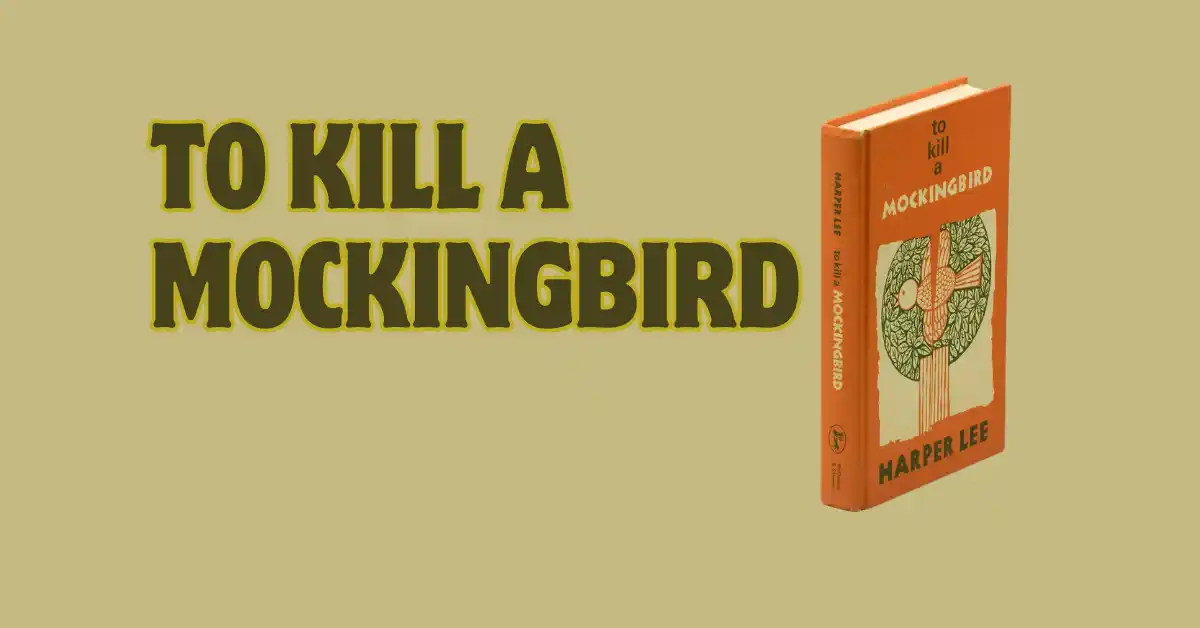
To Kill a Mockingbird: When Children See Clearer Than Adults
Some books you read once and put down. Others stay with you, keep asking you questions years later.
To Kill a Mockingbird by Harper Lee is the second kind.
On the surface, it’s about a trial in a small Alabama town during the Great Depression. A Black man, Tom Robinson, is falsely accused of raping a white woman. Atticus Finch, a lawyer and father, defends him. His children, Scout and Jem, watch as their father fights a battle everyone knows he’ll lose.
But underneath that story is something bigger. A question the book keeps circling back to: Is it possible to grow up without losing a child’s sense of right and wrong? Can you keep that clear-eyed understanding of justice that children have naturally, or does adulthood inevitably corrupt it?
The book’s genius is in telling this story through Scout’s eyes. Because she doesn’t understand why adults do the terrible things they do. And her confusion—her inability to make sense of the injustice around her—forces us to confront how little sense it actually makes.
Nothing in this novel is accidental. Every detail, every object, every name carries meaning. Harper Lee built a world where symbolism runs through everything, where even a gift left in a tree or a sick dog on the street is saying something important if you pay attention.
Childhood as Moral Clarity
Scout and Jem see things adults have learned not to see.
Adults around them have explanations. That’s just how things are. That’s the way it’s always been. You can’t change people.
But children haven’t learned to accept “that’s just how things are” yet. They still ask “but why?” They still expect the world to make sense. To be fair.
And when it’s not, they’re shocked. Hurt. Confused.
That’s the book’s power. By putting you in a child’s perspective, it strips away all the rationalizations adults use to justify injustice. You’re left with the raw truth: this is wrong. Obviously wrong. And everyone participating in it knows it’s wrong but does it anyway.
Scout and Jem represent that last moment before you learn to stop questioning. Before you accept that fairness is a nice idea but not how the real world works.
The book asks: what if we didn’t learn that lesson? What if we kept that childhood insistence on justice?
Everything Means Something
Harper Lee doesn’t waste anything in this book. Every object, every character, every small detail is doing work.
I’m going to walk through some of the symbolism. Some of this gets into spoiler territory, so if you haven’t read the book and don’t want things revealed, maybe skip to the end.
But if you have read it, or if you’re curious about the layers underneath the story, keep reading. Because this book rewards close attention in ways that still surprise me.
⚠️ SPOILERS AHEAD
The Gifts in the Tree
Early in the book, Scout and Jem find gifts hidden in a knothole in a tree near the Radley house. Small things. A couple of old pennies. Carved soap figures. A broken pocket watch. Some grey twine.
At first they seem random. Just objects.
But think about what they might mean.
The pennies are Indian-head pennies from 1900 and 1916. Those dates probably represent Arthur Radley’s birth and the year he was locked away. His life, marked by two coins. One for beginning, one for when everything stopped.
The soap dolls are carved to look like Scout and Jem. Soap is for cleaning. Children—innocent, unprejudiced children—are the ones who might “clean” society. They haven’t been dirtied by hate yet.
The broken watch is time that stopped. Arthur’s youth was stolen from him, locked away by his family. And you can’t fix that. Some damage is permanent.
The grey twine—in some cultures, grey thread symbolizes long life. Scout later thinks of it not as an object but as “our lives.” Like the connection between them and Arthur is woven together. Tied.
These aren’t just gifts. They’re Arthur Radley communicating the only way he can. Telling his story through objects because he can’t tell it in words.
The Snowman Made of Mud
There’s a scene where it snows—rare in Alabama. Jem builds a snowman, but there’s not enough snow. So he makes a base out of mud, then covers it with the white snow.
That snowman is the whole social structure of the South in one image.
Black labor forms the foundation. Everything is built on it. But it’s covered up, hidden under a white surface that gets all the visibility and credit.
And the snowman looks like Mr. Avery, a neighbor the kids initially see as crude and judgmental. But during a house fire, Mr. Avery risks his life saving furniture. And the children’s opinion of him changes.
When the snow melts, the mud underneath is revealed. The children’s simplistic judgment melts too. They learn people are more complicated than they first appeared.
Mockingbirds and Names
The most famous symbol in the book: mockingbirds.
Atticus tells his children it’s a sin to kill a mockingbird because they don’t do anything but sing. They don’t eat crops or bother anyone. They just make music.
A mockingbird represents pure innocence. Someone who only gives, never harms.
And there are mockingbirds throughout the book—people destroyed for no reason except that someone could destroy them.
But look at the names too.
Finch is the family name. Finches are small songbirds. Gentle. Vulnerable. Moral.
Tom Robinson. Robin—another songbird. Migratory. His name itself marks him as innocent, as someone just passing through who gets killed for existing.
Even the names are telling you who these people are symbolically.
Mrs. Dubose and Her Camellias
Mrs. Dubose is this mean old woman who yells racist things at the children every time they pass her house. She has a garden full of camellias—Alabama’s state flower. White flowers.
The white camellias represent the entrenched racism she’s grown up in. That’s her foundation, her worldview, the thing she’s cultivated her whole life.
But she’s also fighting morphine addiction. Dying. And she’s determined to die free of the drug, no matter how painful.
Atticus calls her the bravest person he knows. Not because of her beliefs—which are awful—but because of how she faces her death. Courage, he’s showing the children, isn’t about being right. It’s about endurance. About facing hard things without flinching.
When Jem destroys her camellias in anger, his punishment is to read to her every day. To tend to her garden. To care for these flowers he hates.
He’s learning to care for difficult people. To see past their ugliness to something human underneath.
And when she dies, she sends him a camellia bloom. A single white flower that represents both her racism and the grudging respect that grew between them.
Pulling out racism by the roots—that’s the image. You can’t just ignore it or cover it up. You have to actively uproot it.
The Rabid Dog
There’s a scene where a rabid dog appears in the neighborhood. Everyone’s terrified. Rabies spreads fast. One bite and you’re infected.
The dog is racism. Spreading through the community. Irrational. Deadly.
Atticus has to shoot it. He’s called “One-Shot Finch” because he can hit anything with one bullet. But he hates guns. Hates violence. Hasn’t touched a gun in years.
Before he shoots, he takes off his glasses. His personal code—his peaceful nature—has to be set aside to protect the community.
And he shoots the dog, but the shot isn’t perfect. The dog suffers before dying. Because Atticus doesn’t take pleasure in this. Even killing something dangerous isn’t something he enjoys.
That restraint—that reluctance to use power even when you have it—that’s real courage according to the book.
Atticus’s Glasses Throughout
Watch what Atticus does with his glasses during the trial.
When he’s being the gentle father, the glasses are on. When he shifts into lawyer mode—when he has to be ruthless in questioning Mayella Ewell—the glasses slip down his nose.
And when he reaches the moment of complete moral confrontation, he removes them entirely.
The glasses represent how he sees the world. His code. His values. And at different moments, he has to adjust that vision. Has to see clearly in different ways depending on what the moment requires.
Atticus: Action, Not Just Words
A lot of people remember Atticus Finch as this wise, moral figure who gives great speeches about justice.
And yes, he does that. But what makes him powerful in the book isn’t what he says. It’s what he does.
He takes Tom Robinson’s case knowing he’ll lose. Knowing it’ll cost him socially. Knowing people will hate him for it. He does it anyway because it’s right.
He doesn’t make a big deal about his courage. Doesn’t brag about his principles. He just lives them. Quietly. Consistently.
And his children watch. That’s how they learn. Not from lectures about morality, but from watching their father do the hard thing even when no one’s watching, even when there’s no reward, even when everyone around him thinks he’s wrong.
Moral action over moral speech. That’s what the book values.
Can You Grow Up Without Growing Cold?
At the beginning, Scout and Jem are children who believe in fairness, justice, goodness.
By the end, they’ve seen how the world actually works. They’ve watched an innocent man convicted because of his skin color. They’ve seen their father lose despite being right. They’ve learned that justice and legality aren’t the same thing.
They’ve grown up.
But have they lost that childhood clarity? That sense that wrong is wrong, no matter what adults say?
The book’s answer seems to be: maybe not. Maybe if you have the right models—people like Atticus who keep fighting even when they lose—you can keep that sensitivity alive. Maybe growing up doesn’t have to mean accepting injustice.
Maybe you can learn how the world works without becoming part of what’s wrong with it.
That’s the hope the book offers. Not that the world is fair—it clearly isn’t. But that some people refuse to let unfairness become normal. Refuse to stop being shocked by injustice just because it’s common.
Why This Book Still Matters
To Kill a Mockingbird was published in 1960, set in the 1930s. It’s dealing with racism in the Jim Crow South.
You might think: okay, but that’s history. Things have changed.
Except the questions the book asks are still relevant. How do you maintain moral clarity in a world that constantly asks you to compromise? How do you teach children about injustice without making them cynical? How do you fight battles you know you’ll probably lose?
And the symbolism—the way everything in the book means something—reminds you that details matter. That paying attention matters. That seemingly small things can carry enormous weight.
The mockingbird isn’t just a bird. The snowman isn’t just a snowman. The gifts in the tree aren’t just gifts.
Everything is saying something if you listen carefully enough.
Awards & Recognition
- Pulitzer Prize for Fiction (1961): This was awarded not just for literary merit, but for how the novel captured America’s moral conscience at a time when the civil rights movement was impossible to ignore. A courtroom story told through a child’s eyes was enough to shake the nation.
- Alabama Author Award for Fiction (1961): This recognition is especially significant because the novel holds up a mirror to Alabama itself—its people, prejudices, and quiet courage—without ever turning cruel or defensive.
- National Book Award Finalist for Fiction (1961): Although it didn’t win, being a finalist placed the book firmly in the national conversation.
- Audie Award for Classic (2007): Decades later, the audiobook won for proving something rare, that this story still works powerfully when heard. The spoken word brings out the warmth, irony, and quiet grief that sit between Harper Lee’s lines.
My Thoughts About the Book

To Kill a Mockingbird asks a question it doesn’t fully answer: Can you grow up without losing your sense of justice?
The book suggests maybe you can. If you have people like Atticus showing you how. If you refuse to accept “that’s just how things are” as an explanation. If you keep that childhood insistence that the world should be fair, even when it isn’t.
Growing up is inevitable. But growing cold? Growing comfortable with injustice? That’s a choice.
Scout and Jem will never see the world the same way after Tom Robinson’s trial. They’ve lost their innocence—that belief that adults always do the right thing, that the system works, that good always wins.
But they haven’t lost their conscience. They’re still shocked by what happened. Still hurt by it. Still know it was wrong.
And maybe that’s the best we can hope for. Not innocence—because you can’t keep that once you’ve seen how the world really is. But sensitivity. The ability to still be hurt by injustice instead of numb to it.
The mockingbirds in this book get killed. Tom Robinson. Arthur Radley’s youth. The children’s belief in simple goodness.
But the story itself—the witnessing, the remembering, the refusal to pretend it was okay—that survives.
And maybe that’s what Harper Lee is saying: We can’t always stop the mockingbirds from being killed. But we can refuse to forget. Refuse to accept it. Refuse to become the kind of people who think it’s fine.
That refusal—that stubborn insistence on caring even when it’s easier not to—that’s what keeps us human.
Some Questions That Came to My Mind While Reading This Book (and What I Felt)
Can one grow into adulthood without losing a child’s sensitivity to injustice?
Reading this book made me feel that children instinctively recognise unfairness, but adulthood teaches us to justify it. Scout and Jem don’t learn justice — they unlearn society’s excuses.
What does courage really look like in a deeply unjust society?
The book convinced me that courage isn’t loud or victorious. It is often quiet, lonely, and unrewarded. It is like standing up even when you know you will lose.
Why does society protect its prejudices more fiercely than innocent people?
Because prejudice maintains comfort and hierarchy. Innocence threatens it. This is why characters like Tom Robinson and Arthur Radley are easier to sacrifice than confront honestly.
Is silence always harmless if it follows social norms?
The novel made me realize that silence can be one of the most dangerous forms of complicity. When everyone stays quiet, injustice becomes tradition.
Why are children able to see people more clearly than adults?
Because they haven’t yet learned who they are supposed to fear or despise. Scout sees people before categories but adults see categories before people.
Is Atticus Finch brave because he fights, or because he restrains himself?
What stayed with me was that Atticus chooses restraint over power. His bravery lies in fairness, not dominance. He never fights unless it is unavoidable.
Who are the real “mockingbirds” in the novel?
To me, mockingbirds are those who do no harm and still suffer — not just Tom Robinson or Arthur Radley, but anyone crushed by a system they never challenged.
Does growing up mean learning to live with injustice?
The book left me unsettled here. Growing up seems inevitable — accepting injustice should not be. The novel quietly asks whether we choose indifference, or learn it.
Why was Tom Robinson shot seventeen times?
I tried to find a symbolic meaning in the number seventeen itself, but I don’t think Harper Lee intended one. The power of the moment doesn’t lie in the number, it lies in excess.
Why do many of us dislike this book when we are young, but appreciate it deeply as adults?
When I was younger, I couldn’t get past a few pages. I dropped it into my unread stack. As a young adult, the book feels slow, moral-heavy, and uncomfortable. As an adult, I realized that discomfort is the book. With age, we recognize the quiet compromises, the silences, and the everyday prejudices that the novel exposes so calmly, and that’s when it starts to hurt in the right way.
Why didn’t Mayella Ewell testify against her father, even if it could have helped her escape the abuse?
Because telling the truth wouldn’t have saved her. Instead, it would have destroyed her in a different way. As a poor white woman, accusing her father meant losing the only protection society grudgingly gave her.
The book made me feel that Mayella chose survival over justice. In a world structured against her, truth wasn’t freedom she could afford, it was another kind of danger.Why does this book stay long after the plot ends?
Because it doesn’t resolve injustice. It normalizes it, the way real life does. The trial ends, childhood moves on, but the moral unease remains. That lingering discomfort is the book’s quiet triumph.
Other Books You Might Want to Read
If To Kill a Mockingbird stayed with you because of how it looks at injustice through quiet, personal lives, these books speak to similar questions in different settings.
You might want to read White Nights if you’re interested in how innocence and moral sensitivity erode with age, and how people retreat into inner worlds when reality feels overwhelming.
If what struck you most was how society enforces cruelty through norms rather than violence, One Part Woman offers a devastating look at how communities quietly punish those who don’t conform.
For a non-fiction perspective on growing up inside structural injustice rather than learning about it later, The Elephant Chaser’s Daughter mirrors Scout and Jem’s early moral awakening in a very different social context.
If the courtroom sections made you question who really decides what justice looks like, Ajaya: Roll of the Dice similarly challenges winner-written morality by retelling an epic from the losing side.
And if you were drawn to the idea of quiet courage and endurance rather than loud heroism, The Silent Raga explores how silence itself becomes a social prison, especially for women.
A classic that doesn’t comfort—only confronts. Worth owning, rereading, and sitting with
Affiliate link. I may earn a small commission at no extra cost to you.