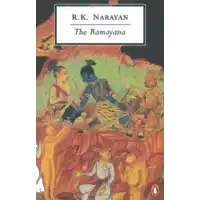
Ramayana By R.K Narayan
R. K. Narayan’s retelling of the Ramayana is not trying to dazzle you or challenge what you know. It is not written to shake up old ideas or present bold new readings of an ancient story. Instead, this book does something quieter and perhaps more generous. It opens a door. It invites you into one of the oldest and most beloved narratives in human history without asking you to prepare too much or know too much beforehand. If you have never read the Ramayana, or if you have only heard bits and pieces of it, this is a version that will meet you where you are.
This is not a scholarly edition. It is not heavy with footnotes or dense with interpretation. Narayan wrote this book to tell the story cleanly and clearly, letting the events unfold in their own time. He wanted readers to follow along without stumbling over elaborate language or getting lost in long digressions. What you get is the Ramayana in a form that feels manageable, unhurried, and deeply respectful of the original without trying to overwhelm you.
The Story Comes from Kamban, Not Valmiki
Before we go further, it helps to know where this version comes from. R. K. Narayan did not base his retelling on the Sanskrit Ramayana written by Valmiki, which is the oldest and most famous version of the epic. Instead, he drew from the Tamil Ramayana composed by the poet Kamban in the eleventh century. Kamban’s work is not a direct translation of Valmiki. It carries its own voice, its own rhythm, and its own way of seeing the story. Kamban brought a different kind of emotional texture to the tale, one that is more lyrical and intimate in certain moments.
Narayan admired Kamban’s approach. He absorbed that poetic sensibility and carried it into his own prose. So when you read this book, you are not reading Valmiki filtered through English. You are reading Kamban filtered through Narayan. That distinction matters, especially if you later decide to explore other versions of the Ramayana. Knowing where this retelling comes from helps you understand its flavor and its choices.
A Retelling Meant to Introduce, Not Reinterpret
This book does not try to surprise you. It does not take liberties with the plot or add modern twists to ancient events. Narayan believed the story was strong enough on its own. His job, as he saw it, was to present it clearly and faithfully. He wanted readers to understand what happens, who the characters are, and why the story has endured for so many centuries. He did not set out to argue a point or push a new interpretation. He simply wanted to tell the Ramayana in a way that anyone could follow.
That restraint is one of the book’s greatest strengths. Narayan does not pile on commentary. He does not pause the story to explain what everything means. He trusts the narrative itself to carry the weight. The result is a retelling that feels calm and steady. You are not rushed. You are not lectured. You are given the story and left to absorb it at your own pace.
The Writing Is Simple and Thoughtful
Narayan’s prose is plain in the best sense of the word. He does not reach for grand metaphors or flowery descriptions. He does not try to imitate the elaborate language of ancient epics. Instead, he writes in the same clear, measured style that made his novels so readable. His sentences are short and direct. His paragraphs move smoothly from one event to the next. There is no clutter, no excess.
This simplicity is deliberate. Narayan understood that the Ramayana is already a towering story. It does not need ornate language to feel important. What it needs is clarity. Readers need to know who is doing what and why. They need to follow the relationships, the battles, the betrayals, and the reunions without getting tangled in complicated prose. Narayan gives them exactly that.
The pacing is unhurried but never slow. The story does not drag. Narayan knows when to linger and when to move on. He spends time on the moments that matter. He lets the emotional beats land without forcing them. The overall effect is calming. You can read this book without feeling stressed or lost. It asks very little of you except attention.
The Epic’s Dignity Remains Intact
One of the hardest things about retelling a sacred or ancient story is maintaining its dignity. You can make it too casual and lose its grandeur. You can make it too stiff and lose its warmth. Narayan manages to avoid both extremes. His Ramayana feels respectful without feeling distant. It honors the story’s importance without making it feel untouchable.
There is reverence in Narayan’s approach, but it is not heavy-handed. He does not stop to remind you how meaningful everything is. He simply tells the story with care. The characters feel real. Their struggles feel genuine. The moral questions they face are not explained away or simplified. Narayan lets them stand.
The result is a retelling that captures the timeless glow of the Ramayana without turning it into something cold or academic. You can feel the weight of the story, but you are not crushed by it. You can appreciate its depth without needing a guide to walk you through every layer.
What This Book Does Well
This version of the Ramayana excels at giving readers the basic outline of the story. If you know almost nothing about the epic, this book will help you understand the sequence of events. You will learn who Rama is, why he was exiled, how Sita was abducted, and what happened next. You will meet the key characters and follow their journeys from beginning to end.
Narayan does not skip over important moments, but he also does not get bogged down in endless detail. He gives you what you need to follow the story and understand its emotional core. That balance is not easy to achieve, and Narayan handles it well.
This book also works beautifully as a gateway into deeper versions of the Ramayana. Once you have read Narayan’s retelling, you will have a solid foundation. You will know the basic arc of the story. That makes it much easier to approach longer, more complex versions later. You can read Kamban’s full Tamil Ramayana or Valmiki’s Sanskrit epic with more confidence because you already know where the story is going.
In that sense, this book is not an endpoint. It is a starting point. It prepares you for more ambitious reading without overwhelming you first.
Where the Book Has Limits
Every book has limits, and this one is no exception. If you are already familiar with the Ramayana, this retelling probably will not offer you much new insight. Narayan is not trying to break new ground. He is not presenting a radical reading of the characters or the events. He is simply retelling the story as Kamban told it, in clear and accessible prose.
For readers who have already studied the epic, this version might feel too straightforward. It does not dive deeply into the philosophical questions the Ramayana raises. It does not explore the different interpretations that have emerged over centuries. It does not compare Kamban’s version with Valmiki’s or point out where they differ. That is not what this book is trying to do.
If you want analysis, comparison, or debate, you will need to look elsewhere. Narayan is not interested in those things here. His goal is simpler and more focused. He wants to tell the story clearly so that readers can understand it. That is all.
This should not be seen as a weakness. It is a matter of scope. Narayan chose to write an introductory retelling, not a scholarly study. He succeeded at what he set out to do. But it helps to know what kind of book this is before you start reading. If you come to it expecting deep literary or philosophical exploration, you will be disappointed.
Understanding Kamban and Valmiki
For readers interested in the Tamil tradition of the Ramayana, this book is especially useful. Kamban’s version is less well known outside Tamil-speaking communities, even though it is considered one of the greatest works of Tamil literature. Narayan’s retelling gives readers a way to begin understanding Kamban’s influence and approach.
If you eventually want to explore the differences between Kamban and Valmiki, reading this book first will help. You will have a sense of the story’s basic shape. You will know the characters and the major events. When you later encounter Valmiki’s version, you will be able to notice the differences in tone, emphasis, and detail.
This kind of comparative reading is not necessary for everyone, but for those who are curious, Narayan’s retelling is a helpful first step. It orients you. It gives you a reference point. It makes the bigger project of understanding the Ramayana’s many versions feel more approachable.
The Reading Experience Is Calm and Steady
Reading this book feels gentle. There is no rush. Narayan does not push you forward or try to impress you with his skill. He simply unfolds the story, chapter by chapter, in a way that feels natural. The tone is conversational without being casual. It is respectful without being stiff.
You can read this book at night before bed. You can read it on a train or during a quiet afternoon. It does not demand intense focus. It does not require you to take notes or look things up. You can simply read and let the story settle into your mind.
This makes it an ideal introduction for readers who might feel intimidated by ancient epics. The Ramayana is a long and complicated story, and some versions can feel overwhelming. Narayan’s retelling removes that pressure. It invites you in without asking too much of you.
Questions You Might Want to Ask Before Buying This Book
Is this a full translation of the Ramayana
No. This is a retelling, not a translation. R. K. Narayan presents the story in clear, modern prose without attempting to reproduce poetic or textual complexity.
Is this based on Valmiki Ramayana
No. It is inspired largely by the Tamil Ramayana written by Kamban, though it is not a direct adaptation or commentary on either version.
Is this book useful if I already know the Ramayana well
Not really. If you are already familiar with the storyline, characters, and key episodes, this book may not offer much new insight.
Who benefits most from reading this version
Non-Indian readers, beginners, and those encountering the Ramayana for the first time will find it especially helpful.
Is the pacing slow or dense
No. The narration is calm and unhurried, but very accessible and easy to follow.
Is this a devotional book
No. It is respectful but literary in tone, focusing on storytelling rather than worship or philosophy.
Who Should Read This Book
This book is perfect for non-Indian readers who want to understand one of the central stories of Indian culture. It is also ideal for Indian readers who grew up hearing bits of the Ramayana but never read it in full. If you are starting from scratch, this is a wonderful place to begin.
It is also a good choice if you are curious about Kamban’s influence and want to explore the Tamil tradition of the Ramayana. Narayan’s retelling gives you a taste of that tradition without requiring you to read the full Tamil text.
However, if you are already deeply familiar with the Ramayana, this book might not hold much for you. It will not challenge your understanding or introduce you to new ideas. It is not written for experts or scholars. It is written for beginners and general readers.
If you want a version that digs into the epic’s philosophical depths or offers a fresh interpretation, you will need to look elsewhere. This is not that kind of book. It is a straightforward retelling meant to help you understand the story, not debate it.
A Book That Welcomes You In
R. K. Narayan’s Ramayana is not trying to replace the epic. It is not claiming to be the definitive version or the final word. Instead, it is offering you a way in. It is standing at the door and saying, come inside, the story is waiting for you. You do not need to know anything beforehand. You do not need to prepare. Just step through and start reading.
That generosity of spirit runs through the entire book. Narayan respects the story and respects the reader. He does not talk down to you or make you feel small. He does not overwhelm you with detail or burden you with commentary. He simply tells the Ramayana in a way that makes sense.
For many readers, this will be the book that begins a lifelong relationship with the epic. It will be the version they remember when they think of Rama and Sita, of Hanuman and Ravana, of exile and return. It will be the version that made the story real for them.
And that is exactly what Narayan hoped for. He wanted readers to feel welcome. He wanted them to understand the Ramayana without feeling lost or excluded. He succeeded. This book does not replace the epic. It welcomes you into it.
If you want a clear, gentle introduction to the Ramayana before exploring deeper or more complex versions, this is a good place to start.
Affiliate link. I may earn a small commission at no extra cost to you.