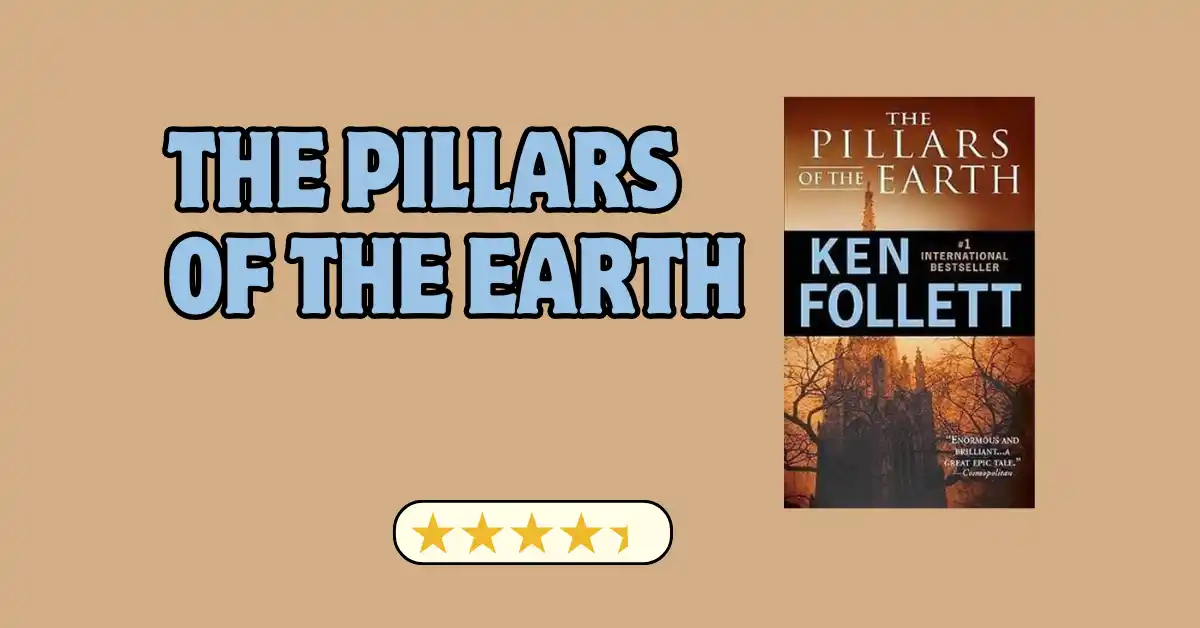
The Pillars of the Earth – Book Review
The story takes place in 12th-century England. This is not the England of fairy tales or romantic countryside paintings. This is a place where winters kill, kings fight over thrones, and the Church holds more power than any army. Life is fragile. The rules change depending on who is in charge that week. And most people at the bottom of society have no say in any of it.
Ken Follett does not romanticise this period. He shows you a world that is genuinely hard to live in. Hunger is real. Violence is close. And the social order is strict enough that a person born into the wrong class can work an entire lifetime without ever moving up. This backdrop is not just decoration. It is the engine that drives every character and every decision in the book.
What makes this setting so effective is that Follett gives you enough detail to understand the world without turning it into a history lesson. You learn how medieval communities functioned, how the Church operated, and how politics worked by watching characters navigate all of it. The history comes alive through people, not through paragraphs of explanation.
The Cathedral as the Heart of the Story
At the centre of everything is a cathedral. A massive, ambitious, almost impossible building project in a small English town. It takes decades to build and it demands everything from the people involved in it. Money, time, health, relationships, and sometimes life itself.
But the cathedral is not just a building. It is the question the whole book is asking. Why do humans choose to build things that are bigger than themselves? Things they may never see finished in their own lifetime? The cathedral represents something that almost every character is chasing in one way or another. A mark on the world. Something that says they were here. Something that lasts.
For the people who build it, the cathedral is faith made physical. For others, it is power and status. For some, it is simply a job that puts food on the table. Follett uses this single structure to hold together dozens of lives and storylines across generations. It is an impressive piece of storytelling architecture in its own right.
This is not just a story about building a cathedral. It is about building lives in a world where power, faith, and survival constantly collide.
Characters and Moral Spectrum
One of the strongest things about this book is that its characters feel genuinely human. Nobody is entirely good. Nobody is entirely bad. Everyone is shaped by the world they were born into and the pressures they face every day.
You will find yourself caring about people who make choices you disagree with. You will understand, even if you do not approve. And occasionally, someone you assumed was simple will surprise you with a depth you did not see coming. The book moves across different layers of medieval society. Builders, craftsmen, monks, bishops, lords, and peasants all get their share of the story. Each class experiences power differently, and Follett shows that clearly.
Characters evolve slowly, the way real people do. Not because of a single dramatic moment, but because of the slow pressure of time and circumstance. The people you meet at the beginning of the book are recognisably different by the end, not because they changed overnight but because life changed them. That feels true in a way that many novels never quite manage.
Women in the Narrative
The women in this book are worth talking about separately, because they are anything but background figures. In a world that gives them very little formal power, the women in The Pillars of the Earth find ways to matter. They influence decisions, shape outcomes, and carry the story forward in meaningful ways.
Their struggles are specific to their time. The constraints they face are real and the book does not pretend otherwise. But within those constraints, they are active. They think, they plan, they fight back in the ways that are available to them. Their resilience is not the kind that quietly accepts hardship. It is the kind that looks for every possible opening and takes it.
What Follett gets right is that he does not make these women feel modern. They are clearly women of their century, with the beliefs and limitations that come with it. And yet they feel fully alive. That balance is genuinely difficult to pull off, and the book manages it well.
Religion and Power
The Church in this book is enormous. Not just as a spiritual presence but as a political one. It owns land, commands armies, appoints leaders, and shapes the daily lives of ordinary people in ways that are hard to overstate. Bishops are power players. Abbots run institutions as large and complex as small governments. The Pope’s decisions echo all the way down to a tiny English town.
What Follett explores with real care is the gap between what religion claims to be and what it sometimes does. Faith and corruption exist side by side in this world. You meet people who are genuinely devoted, who believe sincerely and act on that belief with real goodness. And you also meet people who use the language of faith to justify things that have nothing to do with it. Power has a way of hiding behind whatever is considered sacred at the time.
This tension never gets resolved into a simple verdict. The book does not tell you that the Church is good or bad. It shows you that institutions are made of people, and people are complicated. That is a harder and more honest thing to say.
The Brutality of the World
There is no softening here. The medieval world in this book is violent, hungry, and often unjust. People die from things we would now consider easily treatable. Children grow up too fast. Men in positions of authority abuse that authority. The gap between the powerful and the powerless is vast and mostly uncrossable.
Follett does not linger on brutality for the sake of it. But he does not look away either. When bad things happen, they happen with the weight they deserve. This can be hard to read in places. But it is also what makes the book feel real. A version of this story that cleaned up the darkness would feel dishonest.
The effect of all this is that you come to genuinely care about survival as a storyline on its own. When a character manages to hold on in a world designed to grind people down, it means something. The small victories feel earned. The losses feel heavy. And through all of it, you understand why people held onto things like faith, love, and community so tightly. In a brutal world, those are the things that make it possible to keep going.
Love, Loss, and Persistence
The relationships in this book are not simple or comfortable. Love exists here, genuinely and warmly, but it is always being tested by something. By distance, by conflict, by the demands of survival, by the decisions of people in power who care nothing for the lives they are affecting.
Follett takes his time with these relationships. They develop slowly, they go through real difficulty, and they do not always end the way you want them to. Some of the most moving parts of the book are not dramatic confrontations but quiet moments where two people simply try to hold on to something good in the middle of everything falling apart.
Loss is handled with the same honesty as everything else. When people are taken away from the story, it is felt. The book does not cushion these moments. But alongside loss, there is also persistence. Characters keep building, keep loving, keep trying even when the odds are terrible. That persistence is the emotional core of the book. It is what leaves you moved long after you have finished reading.
Writing Style
Follett writes in a way that is easy to read but never thin. The prose is clear and direct without being flat. He describes places, buildings, and scenes with enough detail that you can see them clearly, but he moves fast enough that you never feel stuck in description.
The storytelling feels very much like watching a long, sweeping historical drama. There are multiple storylines running at the same time and Follett knows how to cut between them in a way that keeps things moving. Just when one thread slows down, another one picks up. This is a book with enormous scope and it manages that scope with real skill.
What surprises people who come to this book expecting slow, dense historical prose is that it actually moves. The pages turn. The chapters end on notes that make you want to read the next one. For a book of this size, that is no small achievement.
Length, Pace, and Reading Commitment
Let us be straightforward about this. The Pillars of the Earth is close to a thousand pages, often in fine print. It is not a book you pick up and finish in a weekend. If you are reading alongside a full daily life, which most of us are, it will likely take around three weeks to get through. Maybe more, maybe a little less depending on how much time you can give it each day.
That is a real commitment. You should know that going in. But here is the thing that many readers say after finishing it: despite the length, it does not feel like a slow book. It feels like a long one, which is different. Slow books drag. Long books carry you. The Pillars of the Earth carries you. You will find yourself putting it down only because life demands it, not because you want to stop.
The size of the book is also part of what it is giving you. A shorter version of this story could not do what this one does. The investment of time is the investment in a world. By the time you are two hundred pages in, these characters and this place feel real to you in a way that only comes from spending genuine time together. That is what the length buys.
Reading Experience
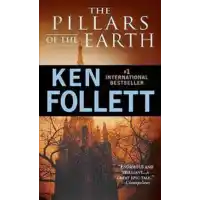
There is a particular kind of satisfaction that comes from finishing a big book. Not just relief that it is over, but a feeling of having genuinely been somewhere. The Pillars of the Earth gives you that. When you reach the end, the world of 12th-century England does not immediately leave you. The characters linger. You think about them. You find yourself wondering what happened next, even though next is not there.
The book demands patience in the way that anything worth doing demands patience. It asks you to slow down, to settle in, to let the world build around you. And if you are willing to do that, what it gives back is a reading experience that stays with you far longer than most books you will ever read.
For many readers, this is not just a book they enjoyed. It is a book they return to. A book they press into the hands of friends. A book they remember the way they remember a long journey they are glad they took.
Questions I Honestly Had While Reading This
Why is this book SO long… and does it really need to be?
Yes, it’s massive. Close to a thousand pages and printed tight. But weirdly, it earns that length. You don’t feel like you’re reading “extra” — you feel like you’re living through decades.
Is this really about a cathedral or is that just a backdrop?
At first it feels like a backdrop. Then you realise everything — ambition, revenge, faith, survival — revolves around it. The cathedral is the spine of the story.
Is the violence and hardship exaggerated?
No. If anything, it feels disturbingly normal. That’s what makes it hit harder — this was just life.
Do the women actually matter in the story?
More than you expect. They’re not just “there.” They shape outcomes, push back, survive, and sometimes outthink everyone else.
Will this feel like reading history or a story?
A story. A very long, very immersive story. You learn history almost by accident.
Is it worth spending 3 weeks on one book?
If you’re okay trading quick reads for something that fully pulls you in — yes. This isn’t a book you finish. It’s one you live inside for a while.
Who This Book Is For
If you love historical fiction, this is about as good as the genre gets. If you enjoy long, character-driven stories where the world feels fully built and the people feel fully real, you will find a lot to love here. If you like the feeling of being completely inside a different time and place, this book will do that for you.
It is not the right book for every reading moment. If you are looking for something fast and plot-heavy that you can finish in a few sittings, this is not the one. If you prefer books where the action is constant and the pages are short, you will likely find the pace here frustrating at times.
But if you are ready to give a book the time and attention it asks for, if you are in a reading phase where you want something deep and immersive rather than quick and light, then The Pillars of the Earth is one of the best choices you can make.
The Pillars of the Earth is about what humans choose to build. Not just in stone, but in their lives, their struggles, and the small and large things they leave behind. It asks what makes a life matter. What outlasts us. What we build when we know the world is against us.
Those are not medieval questions. They are ours too.