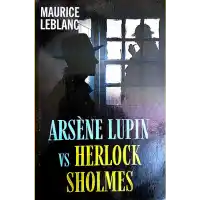
Arsène Lupin vs Herlock Sholmes
This is a spoiler-free review of the second book in the Arsène Lupin series. Think of it as a heist story meets detective fiction, where the thief is the star and everyone else is just trying to keep up. The whole thing reads like a playful rivalry between brilliant minds, written with a smirk rather than a serious face.
This isn’t deep literary analysis. It’s more like sitting down with someone who just finished a fun book and wants to tell you why it made them laugh, even when they probably shouldn’t have been rooting for the criminal.
The tone here is honest and a bit cheeky. Because that’s exactly what this book deserves.
Where This Fits in the Series
If you’ve read the first Arsène Lupin book, you know what to expect. Short stories, not one long novel. Each chapter is its own adventure, its own little game between Lupin and whoever is trying to catch him this time.
You can absolutely read this without reading the first book. Lupin is introduced well enough that new readers won’t feel lost. But if you want the full experience of watching this character evolve from cocky upstart to untouchable legend, start with the first collection.
Just know that this is episodic storytelling. You won’t get one continuous plot building to a climax. Instead, you get a series of encounters, each one a fresh round in an ongoing contest. Some readers love that structure. Others find it repetitive. It depends on what you’re looking for.
What Actually Happens in the Book
Arsène Lupin is still doing what he does best. Stealing things, outsmarting the police, and generally being impossible to catch. This time, though, he’s up against two very different opponents.
First, there’s Inspector Ganimard. He’s been chasing Lupin since the first book, and he’s still not having much luck. Ganimard represents the law, but he’s always one step behind. He’s persistent, sure, but Lupin is always three moves ahead.
Then there’s the other guy. The famous English detective who shows up to solve what the French police cannot. Except his name isn’t Sherlock Holmes. It’s Herlock Sholmes.
Yes, really.
Due to copyright issues with Arthur Conan Doyle, Maurice Leblanc had to change the name. So Sherlock becomes Herlock, and Watson becomes Wilson. It’s obvious who they’re supposed to be, and that’s part of the fun. This isn’t a subtle homage. It’s a direct challenge.
The stories play out as contests. Lupin pulls off a crime or sets a trap. Sholmes investigates. Ganimard chases. And somehow, by the end, Lupin walks away free, usually with a grin and a witty remark.
The Big Idea Behind the Book
Here’s what you need to understand about this book before you start reading it. This is not a story about justice winning. It’s not about the detective solving the case and the criminal getting what he deserves.
This is about watching Lupin escape.
Over and over again.
Even when he’s caught, he gets away. Even when Sholmes figures out his plan, Lupin has another plan. The pleasure isn’t in seeing him punished. It’s in watching him slip through every trap like smoke.
Victory is always temporary. For everyone. Sholmes might win a round, but Lupin will vanish before it matters. Ganimard might corner him, but there’s always a hidden door or a disguise or a forged document that changes everything.
If that frustrates you, this book will drive you mad. If that entertains you, you’ll have a great time.
Arsène Lupin as a Character
Let’s be clear about something. Lupin is not a good person.
He’s charming, yes. He’s funny, sure. But he’s also arrogant, manipulative, and often cruel in his cleverness. He humiliates people for sport. He plays with lives like they’re pieces on a chessboard. He lies, cheats, and steals without remorse.
And yet, he’s the protagonist. The one we follow. The one whose plans we get to see unfold.
You might not like him. That’s fine. You’re not supposed to admire him morally. But his intelligence is undeniable. His audacity is breathtaking. The sheer nerve it takes to pull off what he pulls off is entertaining, even when you know he’s absolutely in the wrong.
Maurice Leblanc writes him as someone who knows he’s the smartest person in the room and enjoys proving it. That makes him infuriating. It also makes him magnetic.
You’ll probably spend half the book wanting someone to finally beat him and the other half hoping he gets away. That contradiction is what makes the character work.
Herlock Sholmes and His Role
Sholmes is exactly who you think he is, just with a different name. He’s brilliant, methodical, and maddeningly calm. Where Lupin is all flash and improvisation, Sholmes is logic and precision.
What’s interesting is that Sholmes doesn’t obsess over Lupin the way Ganimard does. He’s been hired to do a job, and he does it. He observes, deduces, and solves. When he identifies Lupin, he hands him over to the authorities and moves on.
But Lupin always has one more trick.
Sholmes is genuinely good at what he does. He’s not written as incompetent just to make Lupin look better. He solves the mysteries. He figures out the crimes. He even catches Lupin, more than once.
It just doesn’t stick.
That’s the genius of the setup. Sholmes is capable. He’s everything a great detective should be. But Lupin exists in a world where being right isn’t enough. You have to keep him caught. And that’s where Sholmes, for all his brilliance, can’t quite win.
The dynamic between them is the heart of the book. Two geniuses, two completely different approaches, locked in a contest where neither can fully triumph.
Ganimard’s Frustration
Poor Ganimard. He tries so hard.
He represents the law, the system, the world of rules and order. And he’s constantly outmatched. Not because he’s stupid, but because Lupin doesn’t play by the same rules.
Ganimard investigates properly. He follows leads. He builds cases. But Lupin operates on a different level, one where disguises and forgeries and sheer nerve trump procedure.
The contrast between Ganimard’s dogged persistence and Lupin’s theatrical escapes is one of the book’s recurring pleasures. Ganimard is the straight man in a comedy he doesn’t realize he’s part of.
He’s also sympathetic. You feel for him. He’s just trying to do his job, and he’s up against someone who treats the entire legal system like a game.
The trio of Lupin, Sholmes, and Ganimard creates a perfect balance. Ego, logic, and chaos, all circling each other.
The Game of Hunter and Thief
Each story is a new round. A new crime, a new chase, a new set of tricks.
And the outcome is rarely the point.
What matters is how Lupin sets up the crime. How Sholmes unravels it. How Ganimard reacts. The joy is in the process, not the conclusion.
You know Lupin is going to escape. That’s not a spoiler. That’s the entire structure of the book. So instead of waiting to see if he gets caught, you’re watching to see how he’ll do it this time.
Will he use a disguise? A bribed accomplice? A secret passage? A perfectly timed distraction? The fun is in the cleverness of the method, not the suspense of the result.
Some readers find that unsatisfying. If you need stakes, if you need real consequences, this might not work for you. But if you can enjoy a magician showing you the trick after it’s done, you’ll appreciate what Maurice Leblanc is doing here.
It’s less about tension and more about admiration for the craft.
The Copyright Drama Behind the Scenes
Here’s a fun bit of literary history. Maurice Leblanc wanted to pit his gentleman thief against the greatest detective in fiction. So he wrote stories featuring Sherlock Holmes as Lupin’s rival.
Arthur Conan Doyle was not amused.
Legal pressure forced Maurice Leblanc to change the names. Sherlock became Herlock. Watson became Wilson. The changes are paper thin. Everyone knows who these characters are supposed to be.
But the thinly veiled imitation adds to the charm. It’s cheeky. It’s bold. It’s exactly the kind of thing Lupin himself would do.
Years later, after Conan Doyle’s death, Leblanc wrote a tribute acknowledging how much Holmes had influenced his work. The rivalry was always respectful, even when it was legally complicated.
Knowing this context makes the book even more entertaining. You’re not just reading a heist story. You’re reading a playful jab at the most famous detective in literature.
How the Book Reads
The prose is light and quick. Maurice Leblanc isn’t trying to impress you with dense descriptions or philosophical musings. He’s trying to entertain you.
Sentences move fast. Scenes shift quickly. The focus is always on action and dialogue, not introspection. It’s the kind of writing that pulls you through the page without making you work for it.
That doesn’t mean it’s shallow. The cleverness is in the plotting, the setups, the reversals. But it’s not trying to be high art. It’s trying to be fun.
And it succeeds.
Who Should Read This
If you like heist movies, you’ll probably like this. If you enjoy watching clever people outsmart each other, this is for you. If you appreciate classic detective fiction and don’t mind seeing it twisted into something more playful, pick this up.
It’s also great if you want something light. You can read a story or two before bed without needing to remember complex plot threads. Each chapter stands alone.
But if you need deep character development, this isn’t it. If you want moral complexity or emotional stakes, look elsewhere. If the idea of the villain winning every time frustrates you, this will drive you crazy.
It’s a book that knows exactly what it is. Entertainment first, everything else second.
Questions You Might Want to Ask Before Buying This Book
Is this a novel or a short story collection
It’s a collection of short stories, similar in structure to the first Arsène Lupin book.
Do I need to read the first Lupin book before this
It helps, especially to understand Lupin’s personality and running rivalry with the police, but this book can still be enjoyed on its own.
Is Sherlock Holmes really in this book
Yes, but under the name Herlock Sholmes due to copyright issues. Watson appears as Wilson.
Is Holmes the main focus or Lupin
Lupin remains the centre. Holmes is important, but often more focused on solving his client’s case than personally defeating Lupin.
Does Lupin actually get caught
Temporarily, yes. Permanently, no. The fun lies in how he escapes rather than in final justice.
Is Lupin a likeable character
Not really. He is arrogant and manipulative, but undeniably clever and entertaining to read.
Is this a serious detective book
No. It is playful, clever, and written for enjoyment rather than realism or moral depth.
Will I enjoy this book?
Yes if you enjoy classic heists, literary rivalries, and light, episodic reads.
Other Books You Might Like
For a very different kind of intellectual duel driven by logic rather than showmanship, Salvation of a Saint offers a quieter but equally gripping battle of minds. And if you enjoy crime stories where charm matters more than justice, Killing Time in Delhi provides a contemporary, chaotic counterpoint.
Final Thoughts
You may not admire Arsène Lupin. You may not even like him. But watching him outthink everyone, including the greatest detective of all time, is enormous fun.
This book doesn’t pretend to be more than it is. It’s a series of clever games between brilliant minds. It’s a gentleman thief running circles around the law. It’s Sherlock Holmes, barely disguised, finally meeting someone who can match him.
And it’s a reminder that sometimes, the villain getting away is more satisfying than justice being served.
If that sounds appealing, you’re going to have a great time with this book.
If you enjoy clever heists, smug criminals, and watching even Sherlock Holmes be outplayed, this is a fun read.
Affiliate link. I may earn a small commission at no extra cost to you.