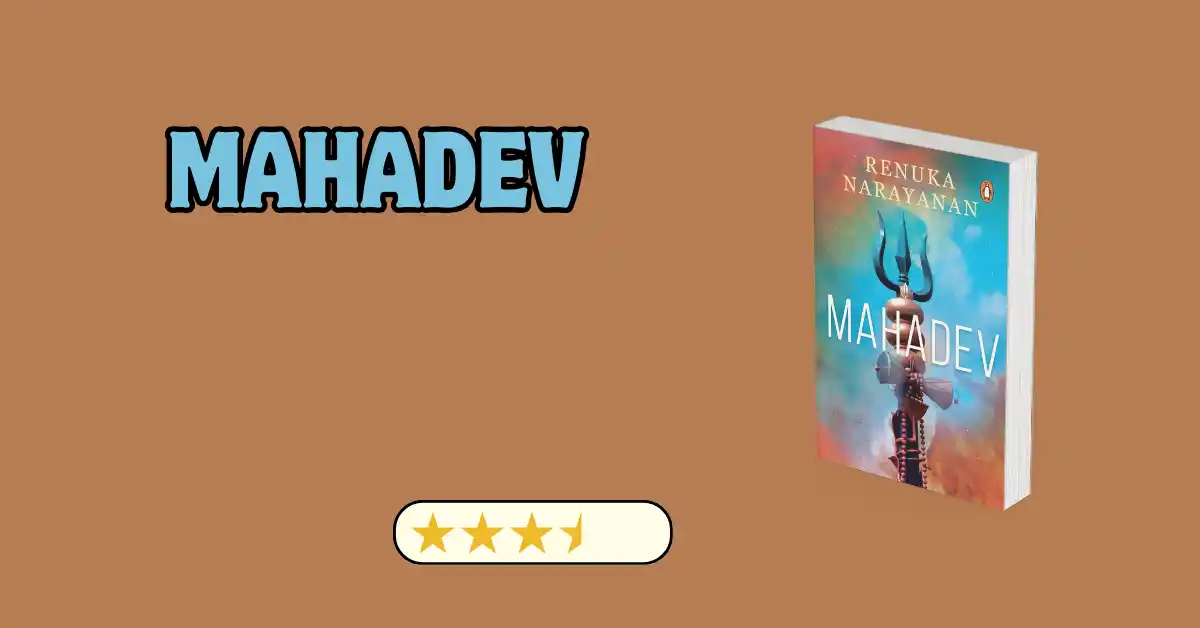
Mahadev: Learning Shiva Through Questions
There are books that tell you stories, and then there are books that help you understand them. Mahadev belongs to the second category. It does not rush you through battles and blessings, through cosmic dances and divine marriages. Instead, it sits you down, makes space for curiosity, and lets you ask the questions you might have been too hesitant to voice. It teaches Shiva not through drama, but through dialogue. And that choice changes everything about how you receive the mythology.
This is not a book that assumes you already know. It begins where many of us actually are, curious but uncertain, drawn to the stories but unsure of their meanings. And it builds from there, gently and without judgment.
A Conversation That Becomes the Book
The structure of Mahadev is its greatest strength. The book is built around a simple setup. A young girl has questions about Shiva. She does not understand why he is shown a certain way, why certain symbols surround him, why people worship him in such varied forms. So she asks. And her family guru answers.
But she is not the only one listening. Her parents are there. Her grandparents are present. The whole family gathers, and the conversation unfolds in their presence. What begins as a child’s curiosity becomes a shared experience. The learning is communal, not solitary. And that makes all the difference.
This format mirrors something ancient and deeply familiar. It is how mythology has always been passed down, not through silent reading or formal lessons, but through conversation. Someone asks. Someone else answers. Others listen and add their own understanding. The stories live because they are spoken, questioned, and retold.
By choosing this structure, the book places itself in that tradition. It does not feel like a text you study. It feels like something you overhear, something you are invited into. And that warmth runs through every page.
Why This Approach Works
The conversational format does something that straight retellings often struggle with. It allows for pauses. For clarifications. For the kind of questions that come up naturally when you are trying to understand something unfamiliar.
The young girl does not ask complicated theological questions. She asks the kind of things anyone might wonder. Why does Shiva have a snake around his neck? Why is he called the destroyer if he is also compassionate? Why does he live on a mountain? Why is he shown with matted hair and ash on his body?
These are not trivial questions. They are entry points. And the guru’s answers are never dismissive. He takes each question seriously and explains not just the surface meaning, but the layers beneath it. He talks about symbolism. He connects the imagery to larger ideas. He shows how each element of Shiva’s form carries meaning, and how those meanings reflect truths about existence, detachment, power, and grace.
What makes this effective is that the explanations do not overwhelm. They unfold at a pace that feels natural. You are not being lectured. You are being walked through an understanding, step by step, with room to absorb each idea before moving to the next.
This structure also allows the book to explore contradictions without making them feel like problems. Shiva is an ascetic who renounces the world, but he is also a householder with a family. He is the destroyer, but he is also deeply compassionate. He meditates in isolation, but he dances in celebration. These paradoxes are not explained away. They are presented as part of what makes Shiva who he is. And the conversational format gives space for that complexity without demanding that it resolve into something simpler.
Shiva as Symbol, Not Just Story
One of the things that sets this book apart is how it approaches Shiva himself. Many retellings focus on the stories. The burning of Kamadeva. The marriage to Parvati. The descent of the Ganga. The destruction of Daksha’s sacrifice. These are vivid, dramatic episodes, and they form the backbone of Shiva mythology.
But Mahadev does not lead with spectacle. It leads with meaning. The stories are there, but they are woven into explanations of what Shiva represents. The focus is less on what happened and more on what it signifies.
Shiva is presented as a figure who embodies contradictions because life itself is contradictory. He destroys because destruction is necessary for renewal. He withdraws because detachment is a form of strength. He loves because compassion is as essential as discipline. The book does not ask you to worship. It asks you to see the philosophy embedded in the imagery.
This approach makes Shiva accessible in a different way. You do not have to know the stories to understand the ideas. And once you understand the ideas, the stories start to make more sense. They stop being just episodes and become illustrations of larger truths.
The guru explains that Shiva’s third eye represents insight. His drum represents the rhythm of creation. His trident represents the balance of forces. His blue throat represents the willingness to absorb poison so that others do not have to suffer. Each detail is unpacked with care, and the cumulative effect is that Shiva becomes more than a deity. He becomes a philosophy made visible.
Learning as a Family Experience
The fact that the whole family is present during these conversations adds something important to the book. It reminds you that mythology is not meant to be learned in isolation. It is something shared across generations. The young girl asks. The guru answers. But the parents and grandparents are listening too, sometimes adding their own thoughts, sometimes learning alongside her.
This makes the book feel warm. It removes the sense that you are being tested or evaluated. There is no pressure to already know, no shame in asking basic questions. The family setting normalizes curiosity. It makes questioning feel like a natural part of faith, not a challenge to it.
It also reflects something true about how traditions survive. They do not survive because people memorize them perfectly. They survive because each generation asks about them, tries to understand them, and finds ways to make them meaningful in their own context. The young girl in this book is doing what every generation has done. She is trying to connect ancient symbols to her own understanding. And the guru is helping her do that, not by demanding belief, but by offering explanation.
This dynamic makes the book feel hopeful. It suggests that mythology does not fade when people question it. It fades when people stop caring enough to ask.
Themes That Run Through the Book
Several themes emerge as you move through the conversations. One of the most important is that curiosity is not disrespectful. The young girl asks freely, and her questions are never treated as irreverent. The book makes it clear that faith and inquiry are not opposites. Understanding deepens devotion. Asking does not weaken belief. It strengthens it.
Another theme is that symbolism matters. The book repeatedly shows that the details of how Shiva is depicted are not random. Everything means something. And understanding those meanings transforms how you see the imagery. What once looked strange or intimidating starts to feel deliberate and profound.
There is also a strong sense that tradition is not static. It is a living conversation. The stories have been told for centuries, but they are told differently each time, shaped by the person speaking and the person listening. The family in this book is part of that ongoing process. They are not just receiving tradition. They are engaging with it, making it their own.
And finally, the book emphasizes that mythology is not just about gods. It is about us. The qualities Shiva embodies, the choices he makes, the tensions he navigates, these reflect human struggles. The stories offer ways of thinking about detachment, desire, loss, love, anger, compassion. They are mirrors, not just tales.
A Writing Style That Prioritizes Clarity
The prose in Mahadev is simple and direct. It does not reach for poetic flourishes or complicated language. It explains. It clarifies. It makes sure you understand before it moves on. This might feel plain to readers who prefer ornate mythology retellings, but it serves the book’s purpose perfectly.
The goal here is not to impress you with language. It is to make sure the ideas land. And for that, clarity is more important than beauty. The writing does not draw attention to itself. It stays out of the way so that the content can come through.
This makes the book accessible to a wide range of readers. Younger readers will not struggle with the language. Readers new to Hindu mythology will not feel lost in references or jargon. Even adults who have read other versions of these stories will appreciate how clearly the symbolism is explained.
There is no preachiness in the tone. The guru does not speak down to the young girl, and the book does not speak down to you. It assumes you are interested, curious, and capable of understanding. It just wants to help you get there.
What It Feels Like to Read This Book

Reading Mahadev is a calm experience. It does not rush. It does not try to shock or dazzle. It unfolds at a steady pace, question by question, explanation by explanation. You are not swept up in epic battles or divine interventions. You are guided through meanings, through interpretations, through connections.
This makes it ideal for readers who are new to Shiva mythology and want a gentle introduction. It is also well suited for families reading together, where one person can read aloud and others can listen and discuss. The conversational format lends itself to that kind of shared experience.
It is reassuring rather than dramatic. There are no cliffhangers, no plot twists, no moments designed to leave you breathless. Instead, there is the quiet satisfaction of understanding something you did not understand before. Of seeing a symbol and knowing what it represents. Of hearing a name and recognizing the layers within it.
For some readers, this will be exactly what they are looking for. For others, it might feel too slow or too instructional. If you are hoping for mythological fiction, for reimagined tales or creative retellings, this is not that book. It is teaching, not storytelling. And it is unapologetic about that.
Who Will Find This Book Useful
Mahadev is ideal for anyone coming to Shiva mythology without much prior knowledge. If you have always been curious but never knew where to start, this book meets you where you are. It does not assume you know the stories. It does not assume you understand the symbolism. It builds from the ground up.
It is also perfect for families who want to explore these ideas together. The format makes it easy to read aloud, to pause and discuss, to let children ask their own questions as they go. It normalizes curiosity and makes mythology feel approachable rather than intimidating.
For readers who prefer explanation over narrative, who want to understand the why behind the what, this book delivers. It is less interested in recounting events and more interested in unpacking meanings. If that appeals to you, you will find this valuable.
But if you are looking for a dramatic retelling, for epic adventures and creative reimaginings, this will not satisfy. If you want mythology as fiction, as entertainment, as spectacle, you will find this too plain, too instructional. It is not trying to thrill you. It is trying to teach you. And those are different goals.
Mythology That Survives by Being Asked About
What Mahadev does best is remind you that mythology is not something distant or untouchable. It is not a set of stories locked in the past, meant to be repeated exactly as they have always been told. It is a living tradition that grows through conversation, through questions, through the willingness of each generation to engage with it on their own terms.
The young girl in this book does not accept the imagery of Shiva without asking why. And that questioning is not treated as doubt. It is treated as the beginning of real understanding. The book suggests that mythology survives not because people memorize it, but because they care enough to ask about it. And in asking, they make it theirs.
Mahadev presents Shiva not through spectacle, but through questions. And in doing so, it reminds us that the stories endure not by being memorized, but by being wondered about, talked through, and understood anew each time they are shared.
If you miss listening to stories of Shiva the way they were told at home or in temples, this book will take you back there.
Affiliate link. I may earn a small commission at no extra cost to you.