Amelia Jane: A Beloved Childhood Read That Looks Different Through Fresh Eyes
There are certain books from childhood that stay with you. Not because they were the most beautifully written or the most educational, but because they were just fun. Amelia Jane was one of those books for me.
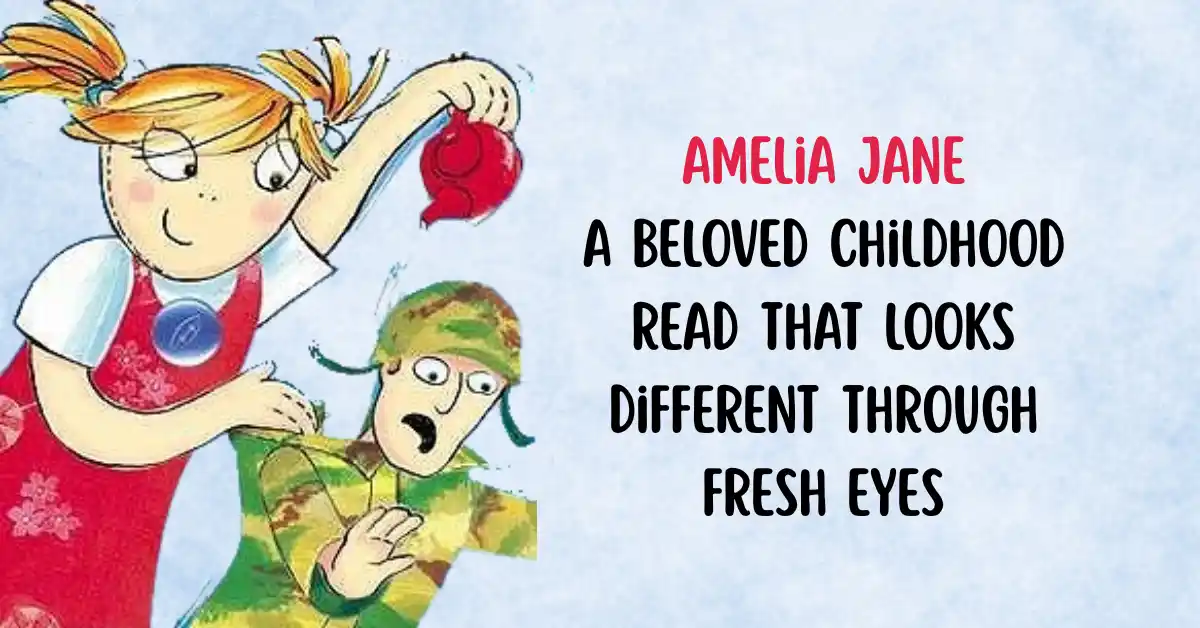
I grew up reading Enid Blyton. Like most children who did, I moved from one series to the next without thinking too much about what I was reading. I just enjoyed it. And Amelia Jane, the loud, naughty, oversized rag doll who lived in the nursery and caused endless trouble, felt like one of the most entertaining characters Blyton had ever created. She was funny. She was bold. She never seemed to care what anyone thought of her, and as a child, that felt exciting.
So when I spotted a copy of Good Idea Amelia Jane at a bookshop, I did not think twice. I picked it up, thought of my own daughter, and felt that warm and happy feeling you get when you think you are about to pass on something wonderful from your own childhood.
I was sure she would love it just as much as I had.
What I Expected My Daughter to Feel
In my head, I had already imagined how this would go. My daughter would read a few stories, laugh at Amelia Jane’s tricks, and come back asking for more books from the series. That is how it had worked for me. Amelia Jane was naughty, yes, but in a cartoon sort of way. She got into trouble. Things went wrong. And somehow it was always funny.
I expected my daughter to see exactly what I had seen as a child. A big, ridiculous rag doll who could not help making a mess of everything. A character who was entertaining precisely because she never seemed to learn. I thought the stories would feel lively and fun and just the right amount of silly.
I was not prepared for what she actually said.
What My Daughter Said That Stopped Me Cold
She read the book. She came back to me a little while later and told me she had enjoyed the stories but she did not like Amelia Jane.
I asked her why.
She thought about it for a moment and then explained, quite simply, that Amelia Jane is a bully.
She told me that Amelia spends most of her time in the nursery making life difficult for the other toys. She hides their things. She plays tricks on them constantly. She causes chaos and seems to enjoy it. The other toys are well behaved and kind, and Amelia just makes things harder for them, over and over again.
Yes, my daughter said, sometimes Amelia learns a lesson by the end of a story. But in general, she is a bad character. She keeps doing the same things. She does not really change. And the toys she torments are just trying to get on with their lives quietly.
When she finished explaining, she looked at me like it was the most obvious thing in the world.
And the strange thing is that the moment she said it, I realised she was completely right.
The Moment I Saw It Too
I sat there for a minute thinking about the books I had loved as a child and wondering how I had missed something so clear.
Because Amelia Jane really is a bully. She is not just naughty in a harmless, bumbling way. She actively targets the other toys. She hides their belongings. She plays tricks that upset them. She creates situations that cause confusion and distress, and she does it for her own entertainment. The toys around her are not willing participants in a fun game. They are on the receiving end of behaviour they did not ask for and cannot easily escape.
When you list it out like that, it is hard to see it as simply mischievous.
What struck me most was how easily and naturally my daughter had identified this. She was not sitting there doing a character analysis. She was just telling me how the stories had felt to her. And what she felt was that Amelia was unkind, and that the other toys did not deserve what she put them through.
She had no confusion about it at all.
How I Saw Amelia Jane as a Child
So why did I miss it? That is the question I kept coming back to.
I think the honest answer is that I was not really thinking about the experience of the other toys when I was young. I was watching Amelia. She was the main character. She was the one with energy and personality and ideas. The other toys felt like background. They were there to react to what she did, not to be understood as characters in their own right.
When you read a story through the eyes of the character causing chaos, it can feel exciting. She was bold. She did things no one else would dare to do. She got into scrapes. She pushed limits. As a child, that felt like fun, not like harm.
But my daughter read those same stories and immediately felt what it was like to be one of the other toys. She put herself in their position. And from that position, the stories look very different. The hiding of toys is not funny. The constant tricks are not entertaining. They are exhausting, and they are unkind.
That shift in perspective changes everything.
What Amelia Jane Is Actually Like as a Character
Let us be fair and honest about who Amelia Jane is, because the books do not try to hide it.
She is loud. She is attention-seeking. She is almost always the one who starts trouble in the nursery. She has a habit of acting first and thinking later, and her ideas are almost always ones that make life more difficult for everyone around her.
She is not cruel in a calculated way. There is no deep meanness to her. But she is self-centred and thoughtless, and she repeatedly chooses her own entertainment over the comfort of the toys she shares a space with.
Yes, there are stories in the series where she faces consequences. There are moments where she feels sorry, or where things backfire badly enough that she is forced to reconsider. Blyton did write those moments in. But they do not add up to a character who grows or changes in any lasting way. By the next story, Amelia Jane is back to her old tricks.
That is a deliberate choice. The naughtiness is the point. The character is built around the idea of a toy who simply cannot behave, and that is what gives the series its energy. But it also means the books are not presenting Amelia as someone to admire or aspire to. She is a character to watch, not to become.
Why Some Children Will Still Love the Books
None of what I have said above means the books are bad. They are not.
The stories are lively and quick. They move fast. There is always something happening. The nursery setting is cosy and imaginative, and the other toy characters each have their own personalities that children often warm to. The writing has that classic Enid Blyton pace that somehow makes even a reluctant reader keep turning pages.
Some children will find Amelia Jane absolutely hilarious. They will laugh at her tricks and enjoy the chaos and wait to see how badly things will go wrong for her this time. If your child has that sense of humour, the books will deliver exactly what they are looking for.
There is also something to be said for stories that are not perfectly tidy. Not every character needs to be well behaved. Not every book needs a role model at the centre of it. Stories that show children behaving badly and facing consequences can be genuinely useful, because children are trying to understand how the world works, and messy characters are part of that.
Why Some Children May React Like My Daughter Did
At the same time, not all children will experience these books the same way.
Some children are particularly sensitive to fairness. They notice quickly when someone is being treated unkindly, and they feel it. For those children, a character who repeatedly hides other people’s things and plays tricks they did not ask for may not read as funny. It may read as uncomfortable.
My daughter is one of those children. She has a strong sense of what is right and what is not, and she picked up on Amelia’s behaviour immediately. She was not put off by the books completely, but she was bothered by them in a way I had not expected.
If your child is the same way, that does not mean they cannot read the books. But it is worth being prepared for the conversation that might follow.
These Books Work Best When You Read Them Together
This is the thing I would say to any parent thinking about picking up the Amelia Jane series.
The books are more interesting, and more useful, when you read them with your child rather than simply handing them over.
Because the stories raise questions worth talking about. What makes someone a bully? Is it still wrong to play tricks if you find them funny? How do you think the other toys feel? Does saying sorry once make up for doing the same thing again and again?
These are not heavy or difficult conversations. They come up naturally out of the stories. And a child who is reading and talking at the same time is getting far more out of the experience than one who is just absorbing the words on the page.
The conversations we had after my daughter read Good Idea Amelia Jane were some of the most interesting we have had about a book in a long time. She had strong opinions. She was thinking carefully. She was applying what she was reading to things she understood from her own life.
That is a good sign. That is what books should do.
What Older Readers Are Really Revisiting
For adults who loved Amelia Jane as children, picking the books up again is a slightly strange experience.
The writing still works. The stories are still fast and fun. But you start to see things you missed before.
It is not that the books were secretly terrible all along. It is more that they belonged to a time when a certain kind of naughtiness was just part of the entertainment. The question of how the other toys were feeling was not really the point. Amelia Jane was the point. Her energy, her size, her ridiculous ideas, her refusal to be ordinary. That was what the books were selling, and they sold it well.
Reading them today, with a child next to you who has a clear and uncomplicated sense of what kindness looks like, you start to see the other side of those stories. You notice the toys who keep having their things taken. You notice how often they are the ones left dealing with the mess. You notice that the fun mostly belongs to Amelia, while the consequences tend to land on everyone else.
That does not make the books bad. It makes them interesting to revisit. And it says something worth noticing, that children today are often quicker than we were to name what they see. They have language for it. They have awareness of it. They are not going to look at behaviour like Amelia’s and just accept it as entertainment without asking whether it is also unkind.
Who This Book Is Really For
The Amelia Jane books are a good choice for parents who want to revisit something from their own childhood and share it with a child. They are a good choice if your child enjoys stories with energy, chaos, and a character who is clearly not trying to be a good example.
They are also, unexpectedly, a good choice for reading together and talking about how people treat each other. If you go in with that in mind, you will find plenty of material to work with.
They may not be the best fit if you are looking for a book with a character your child can look up to, or if your child is the kind of person who finds bullying behaviour genuinely upsetting to read about.
What I Take Away from All of This
Reading Amelia Jane again, through my daughter’s eyes, was one of those small but real moments where a child shows you something you had never managed to see on your own.
I loved those books. I still think they are well written, fast, and funny in their own way. But my daughter read them and saw a child being unkind to the people around her, and she did not think that was entertaining. She thought it was worth mentioning.
She was right.
The books have not changed. But the way children read them might have. And maybe that is not a problem to solve. Maybe it is just an invitation to sit down together, read a few stories about a very naughty rag doll, and talk honestly about what we see.
That conversation, it turns out, can be worth more than the book itself.