Contents
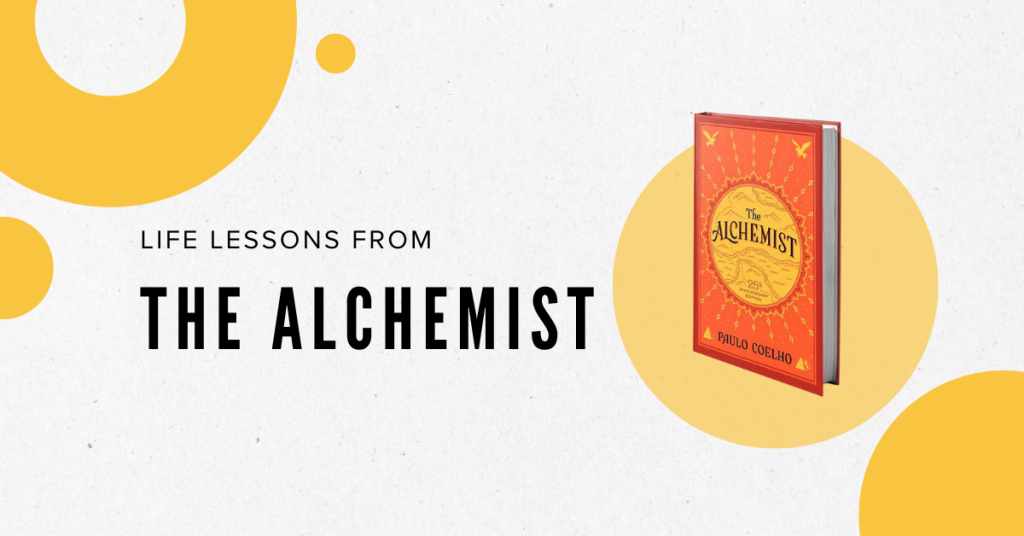
Paulo Coelho wrote The Alchemist in just two weeks. He said the story already lived inside him. Decades later, it has sold over 65 million copies and been translated into 80 languages. What makes it so powerful? It talks about the things we all feel but rarely say out loud. Here are ten lessons from the book that can quietly change how you see your own life.
1. Follow Your Personal Legend
Every person is born with a dream. Not the sleeping kind, but the kind that sits quietly in your chest and shows up when you let your mind wander. The Alchemist calls this your Personal Legend. It is the thing you were put here to do.
The problem is that most of us spend our lives doing everything but that. We pick jobs our parents approve of. We stay in cities that feel safe. We tell ourselves there will be time later. But later has a way of never coming.
Santiago, the shepherd boy in the story, could have stayed in his village. His life was comfortable. But he kept dreaming about treasure near the pyramids, and something in him knew he had to go. He left behind everything familiar to chase something that felt more real than the life he already had.
Everyone, when they are young, knows what their Personal Legend is. At that point in their lives, everything is clear and everything is possible. They are not afraid to dream, and to yearn for everything they would like to see happen to them in their lives.
Paulo Coelho, The Alchemist
Your Personal Legend is not some grand destiny that only a few lucky people get to have. It belongs to you. It is simply the thing that lights you up. Finding it and moving toward it, even one small step at a time, is what gives life its meaning.
2. Overcome Fear
Fear is not always a sign to stop. Often, it is a sign that you are close to something that matters.
In the book, Santiago faces fear at almost every turn. He is robbed in a foreign city. He does not speak the language. He has no idea how to find the treasure he seeks. And yet the thing that could have destroyed him was not any of those events. It was the idea of quitting before he even tried.
There is only one thing that makes a dream impossible to achieve: the fear of failure.
Paulo Coelho, The Alchemist
Most of us are in that same place. We are afraid of being laughed at. We are afraid of failing publicly. We are afraid of wasting time on something that might not work. And so we stay still. We call it being realistic. But the book asks a harder question. What is the cost of never finding out?
Failure is real. It stings. But you get to learn something from it and try again. The regret of never trying, on the other hand, tends to stay with you. The fear of failure is almost always worse than the failure itself. That gap between the two is where most people give up on their dreams.
3. The Universe Conspires to Help You
This is the idea in the book that people either love or struggle with. The moment you truly decide to go after something and take real steps toward it, the world starts to move in your direction.
It sounds like magic. But think about it through a simpler lens. When you decide you want something, you start noticing things you never noticed before. The right person shows up at the right time. A door opens that you never knew was there. Your attention sharpens.
And, when you want something, all the universe conspires in helping you to achieve it.
Paulo Coelho, The Alchemist
This is not the universe doing your work for you. It is the universe responding to your effort. Santiago meets strangers who help him at just the right moment. He finds teachers when he needs them. But none of that would have happened if he had stayed home. The world has a way of opening up for the person who is genuinely moving toward something.
You do not have to believe in fate to believe this. You only have to believe that action changes what is possible.
4. Listen to Your Heart
We live in a world that rewards thinking. Plans, spreadsheets, pros and cons lists. All of that has its place. But The Alchemist reminds us that there is another kind of knowing, one that lives in the chest, not the head.
Listen to your heart. It knows all things, because it came from the Soul of the World, and it will one day return there.
Paulo Coelho, The Alchemist
Your heart knows things your mind cannot always explain. It tells you when something is wrong even before you have the evidence. It pulls you toward certain people and certain paths. The book calls this connection to inner wisdom listening to the Soul of the World. It is the idea that we are all tuned into something bigger than ourselves, if only we stop long enough to hear it.
This does not mean ignoring reason. It means learning to hold both. When your head and heart agree, that is usually a good sign. When they are in constant conflict, it might be worth asking which one you have been ignoring for too long.
Santiago learns to read the signs around him by first learning to listen to what is already inside him. That is the starting point for everything else in the book.
5. Pay Attention to Omens
The book talks a lot about omens, the signs the world sends you when you are on the right path or the wrong one. You might not call them omens in your daily life. You might call them gut feelings, coincidences, or moments when something just feels right.
The point is not to become superstitious. The point is to stay awake. Most of us move through our days on autopilot. We miss things because we are not looking. We are thinking about tomorrow or replaying yesterday while the present moment tries to tell us something.
The simple things are also the most extraordinary things, and only the wise can see them.
Paulo Coelho, The Alchemist
The world is not silent. We are just often too busy to hear it. Santiago’s whole journey depends on his ability to pay attention to what is happening around him, not just what is happening in his head. Notice what keeps coming back to you. Notice what doors keep opening. Notice what you feel when you stand at a crossroads. That kind of presence is something we can all practice, one ordinary day at a time.
6. Enjoy the Journey
We are very good at wanting to arrive. We tell ourselves that when we get the job, the house, the relationship, the right number in our bank account, then life will begin. But life is already happening while we wait for that moment.
Santiago spends most of the book traveling. He works at a crystal shop. He crosses a desert. He faces danger and confusion and long stretches of doubt. And in all of that, he is learning things that the treasure at the end could never have taught him.
It’s the possibility of having a dream come true that makes life interesting.
Paulo Coelho, The Alchemist
The wisdom we pick up along the way is not a consolation prize. It is the main thing. The person you become by pursuing your dream matters far more than the moment you reach it. If you are always looking ahead, you are always missing where you are. And where you are is the only place anything real can actually happen.
7. Embrace Change
Change is uncomfortable. That is just true. It asks you to let go of something familiar before you know what comes next. And the gap between the two, the old thing gone and the new thing not yet arrived, is the hardest place to stand.
But The Alchemist is clear about this. The world is always moving. The desert shifts. The seasons change. Rivers find new paths. Nothing stays still, and the person who insists on staying still gets left behind.
The secret of life, though, is to fall seven times and to get up eight times.
Paulo Coelho, The Alchemist
Santiago has to keep adapting. He loses his money and has to start again. He falls in love and has to choose. He is caught in a war he did not start. At each point, he could have frozen. Instead, he found a way through. Adaptability is not the same as giving up. It is knowing that the goal matters more than any one path toward it. If one road closes, there is usually another. The question is whether you are willing to find it.
8. Take Action
Dreams are beautiful. They are also completely useless without action.
We are great at planning. We research, we talk about it, we make lists, we wait for the right moment. But the right moment is a myth. It does not exist in the way we imagine it. There is only now, and what you do with it.
People are capable, at any time in their lives, of doing what they dream of.
Paulo Coelho, The Alchemist
The Alchemist is not a passive story. Santiago moves. He makes mistakes, he keeps going. When he does not know what to do, he does something, because standing still is its own kind of choice, and usually not a good one.
You do not need to have it all figured out to start. You need a direction and the willingness to take one step. The next step usually becomes clearer after that first one. But it almost never becomes clearer while you are still standing at the beginning, thinking about it. The best time to start was always a while ago. The second best time is today
9. Love Empowers Dreams
At a certain point in the story, Santiago falls in love with a woman named Fatima in the desert. And he faces a real question. Does he stay with her, or does he continue his journey?
What the book says here is gentle but clear. Real love does not hold you back. Real love wants you to become who you are supposed to be. Fatima tells Santiago to go. She knows that a love built on someone abandoning their dream is not love that will last.
You must understand that love never keeps a man from pursuing his Personal Legend. If he abandons that pursuit, it’s because it wasn’t true love.
Paulo Coelho, The Alchemist
This is a lesson for all kinds of love, not just romantic. The people who truly love you will encourage you to grow. They will celebrate your wins even when those wins take you somewhere new. They will not ask you to shrink yourself to stay close to them. And if you love someone, that is how you love them too. Not by keeping them comfortable and contained, but by cheering them toward their own best life.
10. Live in the Present
The last lesson might be the hardest one for most of us. We spend enormous amounts of energy in the past, replaying regrets, or in the future, worrying about what might go wrong. The present is where we spend the least amount of time, and yet it is the only place where life actually happens.
The Alchemist talks about the dangers of getting too comfortable. When Santiago settles into his job at the crystal shop, he starts to feel safe. And safety, while welcome for a while, has a way of becoming a cage if you stay too long.
The secret is here in the present. If you pay attention to the present, you can improve upon it. And, if you improve on the present, what comes later will also be better.
Paulo Coelho, The Alchemist
You do not need to figure out the next ten years. You just need to bring yourself fully to today. That is not just a spiritual idea. It is the most practical advice in the world.
Santiago finds his treasure, but by the time he does, the treasure is almost secondary. The person he has become, the things he has seen and learned and loved, those are what the journey was really about all along.
The Alchemist is a short book. You can read it in a day. But the ideas in it can take a lifetime to fully understand. That might be the whole point.