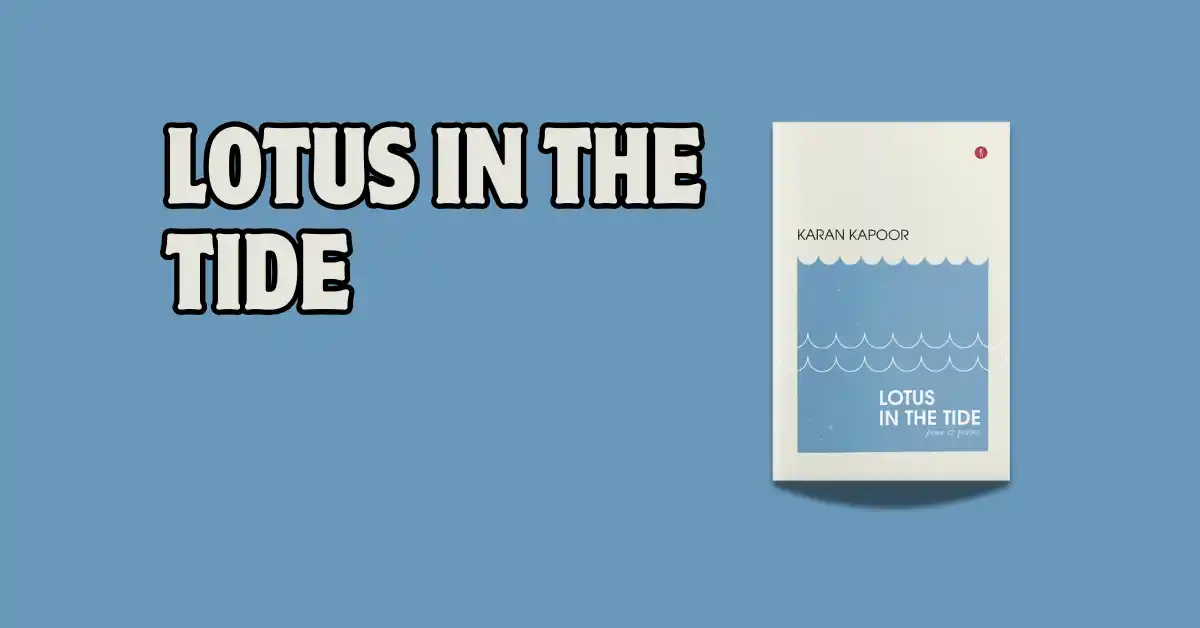
A Gentle Journey Through Lotus in the Tide
There are books you read, and then there are books you live with for a while. Lotus in the Tide belongs to the second kind. This poetry collection does not demand your attention with loud emotions or dramatic turns. Instead, it asks you to slow down, breathe a little deeper, and notice what you might have been ignoring all along.
Reading this book feels less like finishing chapters and more like walking through different rooms of your own mind. Each section opens a new door. Each poem invites you to sit down and stay awhile.
The Structure of the Collection
The book is divided into five sections, and each one guides you through a different stage of awareness. You begin with the external world, the visible and tangible things around you. Then you move inward, toward questions about yourself. From there, the poems take you through transformation, connection, and finally, timelessness.
This is not a random arrangement. The poet has built a path, and you are meant to walk it slowly. Rushing through would be like scrolling past a sunset. You might see it, but you would not feel it.
Nature’s Embrace
The first section feels like stepping into a quiet garden. The poems here are filled with the small, often overlooked details of the natural world. You hear leaves rustling. You notice birds calling to each other. You remember what rain smells like when it first touches dry earth.
These are not grand or sweeping images. They are intimate. They remind you of a time, maybe in childhood or maybe just in memory, when you paid closer attention to the world outside your window. When you listened instead of scrolled. When you noticed instead of hurried.
The poems in this section do not ask you to think too hard. They ask you to remember. To feel. To reconnect with something you once knew but somehow forgot in the noise of daily life.
Questioning the Self Existence
Then the book takes you somewhere quieter. The second section turns the focus inward. The poems here are slower, more thoughtful. They ask questions but do not hand you answers. They leave space for you to wonder.
This is where you start pausing between poems. You might read one and then stare out the window for a few minutes. Memories might surface without warning. Old thoughts you buried might come back up. The writing does not push you forward. It lets you wander.
This section feels mentally absorbing but emotionally calm. It does not stir you up. It settles you down. It gives you permission to not know everything, to sit with uncertainty, to let questions exist without needing immediate resolution.
Inner Transformation
The third section brings in something unexpected. The poet, who is also a physicist, begins weaving science into the poems. But do not worry. This is not textbook language. There are no equations or jargon.
Instead, the poet uses ideas from physics as metaphors. Transformation is explored through patterns found in nature. Change is described using cycles and forces that already exist around us. Abstract concepts become lyrical and approachable.
What makes this section beautiful is how seamlessly the scientific and the poetic blend together. You do not feel like you are learning. You feel like you are seeing familiar things from a different angle. The writing remains gentle, even when the ideas are complex.
Journey to Unity
The fourth section expands outward again. Here, the poems explore how everything connects. You are no longer just thinking about yourself or even just nature. You are thinking about patterns that repeat everywhere. Cycles that govern both the smallest and the largest things.
The writing here reflects loops and spirals rather than straight lines. You are reminded that life does not move forward in a simple way. It circles back. It repeats. It reconnects.
This section feels bigger than the ones before it. It moves from the personal to the universal. From the individual to the interconnected. It asks you to see yourself not as separate, but as part of a much larger whole.
Timelessness and Eternity
The final section is where the book seems to exhale. The poems here feel unbound by time. They explore infinity, not as an abstract idea, but as something present in nature and in your own consciousness.
There is a stillness in this section. A sense of arrival. Not an ending, but a settling. The poems do not rush to conclude anything. They let you sit in the feeling of endlessness.
Reading this section, you might find yourself slowing down even more. You might close the book and just sit quietly for a while. That is exactly what it invites.
Personal Highlights
Two poems stood out to me in particular. The Wisdom of Trees, from the first section, carries a quiet strength that stayed with me long after I read it. The Lotus Question, from the second section, asks something simple but profound, and I found myself returning to it several times.
I will not explain them here. Some things are better experienced than analyzed.
The Writing Style
The language in this collection is calm and meditative. Every word feels chosen carefully, but the overall effect is effortless.
This is poetry meant to be felt more than dissected. You can read a poem once and feel something. You can read it again a week later and feel something different. The layers are there, but they reveal themselves slowly.
How to Read This Book
Do not rush through Lotus in the Tide. It will not reward speed. Read one section at a time. Let days pass between them if you need to. Reread the poems that pull at you. Sit with the ones that confuse you.
This is not a book you finish in one sitting and then shelve forever. It is a book you return to. A book that changes as you change. A book that grows alongside you.
Who Should Read This
If you enjoy reflective poetry, this book is for you. If you are drawn to nature, philosophy, and quiet inner exploration, you will find much to love here. If you appreciate when science and spirituality meet without clashing, this collection does that beautifully.
But if you prefer narrative-driven poetry with strong emotional peaks, this might feel too gentle. If you want immediate clarity and resolution, the open-ended questions here might frustrate you.
Final Thoughts
Lotus in the Tide is not a book you rush through. It is a book you sit with. You return to. You quietly grow alongside. It does not demand anything from you except presence. And in return, it offers you space. Space to think. Space to feel. Space to simply be.
If you enjoy poetry that slows you down, reconnects you with nature, and quietly nudges you inward, this book deserves a place on your shelf.
Affiliate link. I may earn a small commission at no extra cost to you.