Ram Scion of Ikshvaku
The Ramayana is a story most of us know before we even read it. We grow up hearing about Ram’s exile, Sita’s abduction, and Ravana’s defeat. We know how it begins and how it ends. So when a writer decides to retell it, the challenge is not about revealing what happens next. The challenge is making us care about what happens next.
Amish Tripathi’s Ram Scion of Ikshvaku does something clever right from the start. The book opens with the famous deer hunting episode. This is the moment that sets everything in motion. The event that splits Ram’s life into before and after. And then, instead of moving forward, the story moves backward. It takes us through Ram’s childhood, his youth, his relationships, his choices. We already know where this is headed. But Amish makes us wonder how we got here.
This framing is important because it changes how we experience the story. This is not a tale being told by a distant narrator about gods and demons. This is a story about people, about decisions, about consequences. The cyclical structure reinforces that. We start at the deer hunt, we loop back through time, and we return to the deer hunt again at the end. It is a way of saying that these events were shaped by everything that came before. That what looks like fate was actually built piece by piece through human choice.
Ram and Lakshman as Brothers, Not Symbols
In most traditional retellings, Ram is perfect. He is dharma personified. He does not struggle. He does not doubt. He simply follows the path laid out for him with unwavering certainty. But that version of Ram, as inspiring as it may be, is hard to connect with. How do you relate to someone who never falters?
Amish gives us a Ram who is deeply principled, yes, but also deeply human. His discipline is not effortless. His choices are not easy. He struggles to reconcile what is right with what is expected. He makes mistakes. He carries guilt. He questions himself. This Ram is someone you can believe in because he is someone who has to work for his integrity. Dharma here is not destiny. It is discipline. It is the constant effort to do what is right even when it costs you everything.
And then there is Lakshman. In many versions of the Ramayana, Lakshman exists primarily to serve Ram. He is loyal, fierce, protective, but not always fully formed as his own person. Here, Lakshman is given weight. His bond with Ram is not just duty. It is love. It is respect. It is the kind of relationship where you choose to stand beside someone not because you have to, but because you cannot imagine doing anything else.
The emotional core of this book is built on that relationship. When Ram suffers, Lakshman feels it. When Ram is forced into impossible situations, Lakshman’s anger and helplessness are palpable. Their brotherhood is one of the strongest elements of the story, and it grounds the epic in something deeply personal.
Amish also gives us glimpses of the other brothers. Shatrughan is portrayed as intelligent and well versed in Vedic knowledge. Bharath is shown to have an independent spirit, someone who thinks for himself. All three brothers respect Ram, but they are not mere shadows of him. They have their own identities, their own strengths. The family dynamic feels real. These are brothers who love each other, argue with each other, and stand by each other when it matters.
Sita’s Presence, Even When Brief
Sita does not dominate this book. This is Ram’s story, and much of it takes place before Sita enters his life in a significant way. But even in the moments where she appears, she matters. Amish does not make her ornamental. Her voice carries weight. Her reactions influence the emotional tone of the events around her.
What stands out is that Sita is not passive. Even when she has limited space on the page, she feels like a person with her own thoughts, her own sense of agency. She is not just someone things happen to. She is someone who responds, who chooses, who matters. The book does not fully explore her arc in this volume because that is not the focus here. But it does enough to make you want to see more of her in the books that follow.
Ravana Reimagined, Not Softened
Ravana in popular imagination is often reduced to a one dimensional villain. He is arrogant, cruel, lustful. He exists to be defeated. But Amish does something more interesting. He gives us a Ravana who is dangerous not because he is evil, but because he is capable. He is a warrior. He is a strategist. He commands respect even from those who oppose him.
One of the most striking moments in the book is the confrontation between Ravana and Dasharatha. In this version, Dasharatha looks down on traders. He considers them beneath warriors in the social order. Ravana, does not tolerate this dismissal. He puts Dasharatha in his place. The scene is charged with tension, pride, and the clash between old hierarchies and new power.
This is not a Ravana you can easily dismiss. He demands attention. He challenges the assumptions of those around him. He is formidable. And that makes the eventual conflict between him and Ram more compelling. This is not a hero fighting a caricature. This is a clash between two powerful figures with different visions of the world.
Kaikeyi, Manthara, and Sumitra Seen Differently
In traditional versions of the Ramayana, Manthara is often portrayed as a scheming servant who manipulates Kaikeyi out of spite or jealousy. She is a convenient villain, a figure we can blame so that Kaikeyi’s actions seem less culpable. But Amish gives us a very different Manthara.
Here, Manthara is a powerful trader. She rose from poverty through ambition and skill. She built her influence through intelligence and hard work. Her relationship with Kaikeyi is not that of a manipulative servant whispering poison into a queen’s ear. It is a relationship based on power. Manthara’s influence over Kaikeyi is earned, or perhaps purchased. She is not incidental to the plot. She is central to it.
This reinterpretation is one of the most striking aspects of the book. It reframes the entire dynamic around Kaikeyi’s decision. Kaikeyi herself is no longer just a woman swayed by bad advice. Her choices are framed within the context of power, influence, and political calculation. She is actively positioned. She is not merely manipulated.
And then there is Sumitra. In most retellings, Sumitra is the queen who fades into the background. She is the third wife, the one without much agency or importance. But Amish suggests that Sumitra is actually the most perceptive of the three queens. Her lack of prominence is not due to lack of intelligence. It is due to the hierarchy of marriage. She sees things clearly, but she does not have the power to act on what she sees. It is a quiet but powerful detail.
Vishwamitra and Vashishta Adding Ideological Tension
The rivalry between Vishwamitra and Vashishta is not new to the Ramayana tradition. But in this version, their conflict adds more than just personal animosity. It adds ideological tension. These are two figures with fundamentally different worldviews. Their opposing philosophies shape the direction of Ram’s early life. They pull him in different directions, and Ram has to navigate between them.
This conflict gives the story momentum. It is not just about family drama or political intrigue. It is about competing visions of what dharma means, what leadership requires, what a prince should become. The tension between Vishwamitra and Vashishta keeps the narrative moving. It adds layers to Ram’s journey. It makes his choices feel weightier because we see the forces acting on him from multiple sides.
Connection to the Shiva Trilogy and a Larger Universe
One of the pleasures of reading this book, especially if you have read Amish’s Shiva Trilogy, is spotting the connections. There are multiple references to the Vayuputras scattered throughout the text. These are not just Easter eggs for fans. They are hints that this story exists within a larger mythological universe, one where different epics and different eras are connected.
Reading the Shiva Trilogy is not mandatory to understand or enjoy this book. The story stands on its own. But if you have read the earlier trilogy, these references add an extra layer of enjoyment. You start to see how the different pieces fit together. You start to understand the continuity Amish is building across his work.
It feels like the quiet thrill of connecting Parthiban Kanavu with Sivagamiyin Sabatham and Ponniyin Selvan. When you recognize the threads linking different stories, it deepens your appreciation for the entire project. Amish is not just retelling individual epics. He is constructing a shared world where these stories speak to each other.
Writing Style and Pacing That Keeps You Moving
Amish writes in a way that prioritizes accessibility and momentum. The prose is straightforward. The sentences are clear. The chapters are structured to keep you turning pages. This is not a book that lingers on poetic language or complex metaphors. It is a book that wants to tell you a story and keep you engaged while doing it.
Some readers might find the writing too simple or too direct. But for most people, this style works. It makes the book a fast read. It makes it easy to stay immersed in the narrative even when dealing with the scale and complexity of an epic. The pacing is brisk. The action moves quickly. There is always something happening, always a new development, always a reason to keep reading.
This is deliberate. Amish is writing for readers who want to be entertained, who want to experience the thrill of a well told story. He is not trying to be literary in the academic sense. He is trying to be compelling. And for the most part, he succeeds.
Themes That Give the Story Weight
At the heart of this book is the question of what dharma really means. In traditional retellings of Ramayana, dharma is often presented as a clear path. Ram follows it without question. But here, dharma is not so simple. It is discipline, yes. It is principle. But it is also something you have to work for. Something you have to define for yourself in the face of impossible choices.
The book also explores power and social hierarchy. The tension between warriors and traders runs throughout the story. Dasharatha’s disdain for traders, Ravana’s rise from that background, Manthara’s influence built through commerce. These are not incidental details. They speak to a larger conversation about who holds power, who deserves respect, and how societies organize themselves.
Family loyalty versus personal principle is another recurring theme. Ram loves his family. He respects his father. But he also has his own sense of what is right. The conflict between these two forces shapes many of his decisions. It is the kind of tension that feels real because most of us have experienced some version of it in our own lives.
One of the most powerful and painful themes in the book is justice and how laws can fail victims. The case of Roshni hits particularly hard. A young woman is brutally attacked, and the perpetrators use loopholes in the law to escape punishment. It is a moment that feels uncomfortably familiar. For Indian readers, it echoes the Nirbhaya case from 2012. And though this book was written before the tragic case of the Kolkata doctor in 2024, the parallels are impossible to ignore. Amish shows us how systems designed to protect people can become instruments of injustice when those in power manipulate them. Ram’s response to this case, his struggle between following the letter of the law and doing what is morally right, becomes one of the defining moments of his character. It forces him to confront the limitations of dharma when dharma itself is constrained by corrupt systems.
And finally, there is the theme of perspective. The book constantly reminds us that legends are shaped by how they are told. The same events can look different depending on who is narrating them, what they choose to emphasize, what they choose to leave out. This is a story about stories as much as it is a story about Ram.
The Reading Experience from Start to Finish
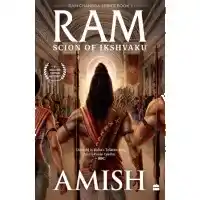
Reading Ram Scion of Ikshvaku is an interesting experience because you are constantly balancing two things. On one hand, you know this story. You know what Ram will face, what choices he will make, where his journey will lead. On the other hand, the way Amish tells it makes it feel fresh. The humanization of the characters, the reframing of motivations, the exploration of relationships. These things give the familiar story new textures.
The book moves quickly. There is very little drag. Even in quieter moments, there is always something brewing beneath the surface. You feel the weight of decisions being made, of consequences building up. The cyclical structure helps with this. Because you know where the story is heading, every scene carries a sense of inevitability. But the journey there still matters.
By the time you reach the end, you are ready for the next book. This clearly functions as an opening act. It sets up characters, establishes conflicts, and leaves several threads unresolved. But it also works as a complete reading experience on its own. You finish the book feeling like you have read a full story, even though you know there is more to come.
Questions You Might Want to Ask Before Buying This Book
Is this the Ramayana I already know
You will recognise the broad outline, but the motivations, power structures, and character dynamics are reimagined in a more human and political way.
Is Ram shown as a perfect hero here
He is principled and disciplined, but also human. His greatness comes from choices and restraint rather than divine perfection.
How different is this from Valmiki or Kamban’s versions
Quite different in tone. This version focuses less on destiny and more on systems, rules, and consequences, while still respecting the core story.
Does Ravana feel like a villain in this book
Not in the traditional sense. He is shown as capable, strategic, and formidable, which adds tension rather than moral simplicity.
What’s new about characters like Manthara and Kaikeyi
They are given power, agency, and social standing. Their influence is earned, negotiated, or bought, not incidental.
Is this connected to Amish’s Shiva Trilogy
Yes, there are references to the Vayuputras. You don’t need to read the Shiva Trilogy first, but having read it adds a satisfying sense of a shared universe.
Is this a fast or slow read
Fast. Like most Amish books, it is structured as a page-turner despite the epic scale.
What other books by Amish should I read if I like this
If you enjoy this, the rest of the Ramachandra Series follows naturally. Readers often also go back to The Immortals of Meluha to see how the larger universe fits together.
Who This Book Is For and Who Might Skip It
This book is ideal for readers who enjoy mythological retellings that apply modern logic and psychology to ancient stories. If you liked the Shiva Trilogy, you will almost certainly like this. If you enjoy seeing familiar characters reimagined with complexity and nuance, this will appeal to you. If you like interconnected fictional universes where different books build on each other, Amish’s approach will feel satisfying.
It is also a good fit for readers who want character driven epics. The plot is important, yes, but the emotional core of the book comes from the relationships. Ram and Lakshman. Ram and his father. Ram and his sense of duty. These dynamics are what make the story work.
On the other hand, this book might not work for readers who are looking for strictly traditional or devotional retellings. Amish takes liberties with the source material. He reinterprets characters, reframes events, and adds his own explanations for why things happen the way they do. If you want a telling that stays close to Valmiki or Tulsidas, this is not it.
It is also probably not the right choice for readers who prioritize literary experimentation. The prose is functional and accessible. It serves the story, but it does not draw attention to itself. If you are looking for beautiful language or innovative narrative techniques, you might find this too straightforward.
What Makes This Retelling Work
Ram Scion of Ikshvaku succeeds not by retelling the Ramayana, but by re-examining it. It asks why characters made the choices they did. It explores the tensions beneath the surface of the story. It treats the epic not as a fixed text, but as a living narrative shaped by perspective, power, and human emotion.
The book works because it respects the source material while also being willing to challenge it. It takes characters we think we know and gives them depth. It takes events we think we understand and recontextualizes them. It does not discard the original story. It builds on it.
For readers who want to experience the Ramayana through a lens that emphasizes choice, consequence, and the complexity of being human, this is an excellent starting point. It is a book that reminds us that even in stories we know by heart, there is always more to discover.
If you want to revisit the Ramayana through human choices, political logic, and a shared mythological universe, this is a compelling place to begin.
Affiliate link. I may earn a small commission at no extra cost to you.